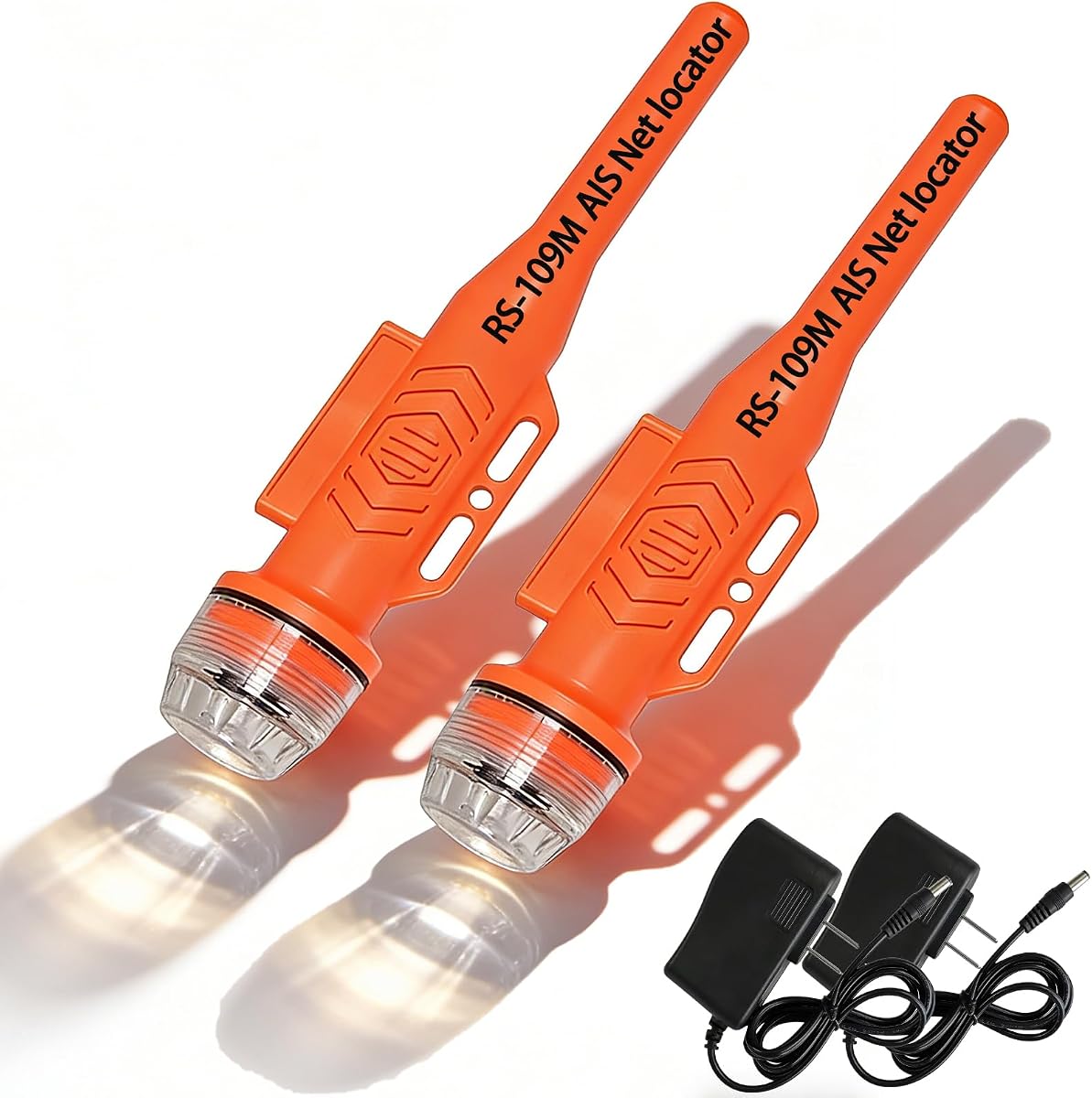
RS-109M Marine Net Locator
4.5Editor score
IPX7 waterproof design
Ten nautical mile range
Two week battery life
This guide compares the top Ais Transponders for 2026 focusing on safety features GPS accuracy and marine compatibility to help boaters choose the right vessel
Navigating open waters requires reliable communication and tracking systems to ensure safety and compliance with international maritime regulations. Ais Transponders play a critical role in modern boating by broadcasting vessel identity and position to nearby ships and shore stations.
We evaluated ten leading models based on transmission range display quality connectivity options and ease of installation. Each unit was assessed for its ability to integrate with existing chartplotters and VHF radios while maintaining robust performance in harsh marine environments.
Every selection highlights specific strengths such as class distinctions alarm functions or portable capabilities for different vessel types. Please note that product availability and pricing fluctuate frequently so verify current details before finalizing your purchase decision.
4.5Editor score

4.8Editor score
4.7Editor score
The following table presents a side-by-side overview of key specifications for each selected model including display options connectivity features and specific use cases ranging from personal safety to commercial vessel tracking.




The Icom MA-510TR stands out as a top-tier option for boaters seeking comprehensive vessel tracking. It features a 4.3 inch color display that provides clear visibility of traffic data even in bright sunlight conditions.
We may earn a commission when you buy through this link, at no additional cost to you.
Its integrated GPS navigation ensures precise position reporting without needing external modules. The unit supports DSC calling with compatible radios and offers USB connectivity for easy data management and configuration updates.
While the price is higher than entry models the reliability and feature set justify the investment for serious mariners. The silent mode allows secure operations when needed and the collision alarm adds an essential layer of safety.
This device is ideal for recreational and commercial vessels requiring robust AIS functionality. If you need a dependable transponder with an intuitive interface the MA-510TR delivers exceptional performance.
The collision alarm feature alerts operators to potential risks before they become critical allowing for timely maneuvers to avoid accidents on busy waterways.
A multilingual user interface ensures that operators from different backgrounds can configure and operate the system efficiently without language barriers.
We may earn a commission when you buy through this link, at no additional cost to you.
The EM-TRAK NF-189 offers a straightforward solution for vessels needing Class B AIS capabilities without complex interface requirements. It is designed for reliable communication in standard marine environments.
We may earn a commission when you buy through this link, at no additional cost to you.
Its compact design fits easily into tight spaces on smaller boats or in crowded instrument panels. The dual voltage support ensures compatibility with various onboard electrical systems making it versatile for different vessel types.
While it lacks advanced display features the core transmission and reception functions perform consistently. This makes it a practical choice for users who prioritize basic safety compliance over graphical data presentation.
Boaters looking for a no-frills transponder that meets regulatory standards will find this model suitable. It provides essential identification and positioning data to improve overall maritime safety.
Supporting both 12 and 24 volt systems allows this unit to be installed on a wide range of vessels from small recreational craft to larger commercial ships.
The small form factor ensures that installation does not require significant modifications to existing vessel layouts or dashboard configurations.
We may earn a commission when you buy through this link, at no additional cost to you.
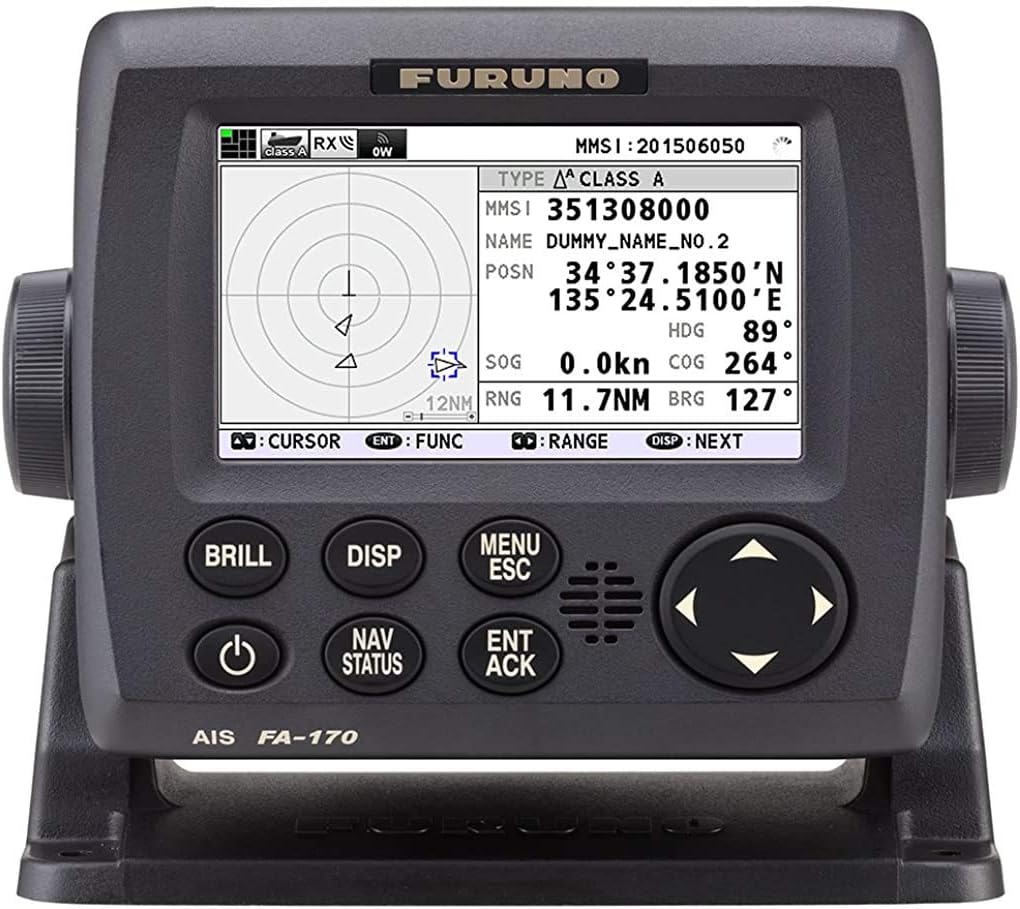
The Furuno FA170 represents the gold standard for professional maritime navigation with Class A transmission capabilities. It supports extensive target storage and provides advanced alerts for potentially dangerous vessels.
We may earn a commission when you buy through this link, at no additional cost to you.
Its comprehensive port configuration including LAN allows seamless integration into complex bridge networks. Users can create custom AIS messages or send name requests to target ships enhancing communication beyond basic data exchange.
The dangerous target list feature proactively identifies high risk vessels allowing crews to take preventive action. This level of detail is essential for large commercial ships navigating congested shipping lanes.
Though expensive and requiring professional installation this unit delivers unmatched reliability and functionality. It is the preferred choice for operators where safety and regulatory compliance are paramount priorities.
The inclusion of a LAN port and multiple input output options enables this transponder to connect with a wide array of bridge equipment for streamlined data flow.
By automatically generating a list of dangerous targets the system reduces the cognitive load on operators and enhances response times to potential collision scenarios.
We may earn a commission when you buy through this link, at no additional cost to you.
The RS-109M Marine Net Locator offers an affordable entry point into AIS tracking specifically designed for buoys and nets. It provides reliable GPS positioning and real-time data transmission to onboard receivers.
We may earn a commission when you buy through this link, at no additional cost to you.
Its IPX7 waterproof rating ensures it can survive submerged conditions which is critical for marine equipment exposed to harsh environments. The high capacity lithium battery supports continuous transmission for up to two weeks.
While it lacks an onboard screen the remote monitoring capability keeps users informed of buoy status and power levels. This feature helps reduce maintenance frequency and prevents loss of valuable fishing gear.
For anglers and commercial fishers needing to track gear efficiently this device offers exceptional value. It combines durability and long battery life to meet the demands of open water operations.
The device syncs positioning and battery data directly to an onboard receiver giving users instant awareness of gear status without needing visual inspection.
Powered by a 3000mAh battery the tracker supports weeks of continuous transmission reducing the need for frequent maintenance checks in remote locations.
We may earn a commission when you buy through this link, at no additional cost to you.
The Raymarine T70424 Bundle combines a VHF radio with AIS capabilities into a single purchase. It is designed to work seamlessly with Raymarine multifunction navigation displays for a unified control experience.
We may earn a commission when you buy through this link, at no additional cost to you.
Included accessories such as the fixed mount simplify installation and ensure the unit is securely positioned on the helm. This bundle eliminates the need to source compatible components separately saving time and effort.
The integration allows for enhanced situational awareness by merging voice communication with visual traffic data. Users benefit from a streamlined interface that reduces clutter and simplifies operation during critical moments.
This package is best suited for those already invested in the Raymarine ecosystem. If you require a cohesive communication and safety system this bundle offers a reliable turnkey solution.
By bundling VHF and AIS the system reduces cabling complexity and provides a single source for both voice and data communications on the vessel.
The included fixed mount accessories ensure that the unit is securely positioned and ready for quick setup without needing additional hardware purchases.
We may earn a commission when you buy through this link, at no additional cost to you.
The ACR RESQLINK is a personal locator beacon designed to send distress alerts via AIS and satellite systems. It is ideal for individual sailors or crew members needing personal emergency signaling.
We may earn a commission when you buy through this link, at no additional cost to you.
Its Return Link Service confirms to the user that rescue services have received the distress signal providing peace of mind during an emergency. This feature bridges the gap between activation and response.
The compact design integrates easily with inflatable PFDs making it unobtrusive during normal operation. NFC technology allows quick access to battery status and test results without requiring special tools.
For those concerned about personal safety in remote waters this beacon offers essential protection. It combines global satellite signaling with local AIS alerts to maximize chances of a successful rescue.
The Return Link Service sends a confirmation back to the beacon owner once rescue services acknowledge the emergency signal ensuring the user knows help is on the way.
NFC technology allows users to check battery life and test status with a compatible mobile device simplifying routine maintenance checks.
We may earn a commission when you buy through this link, at no additional cost to you.
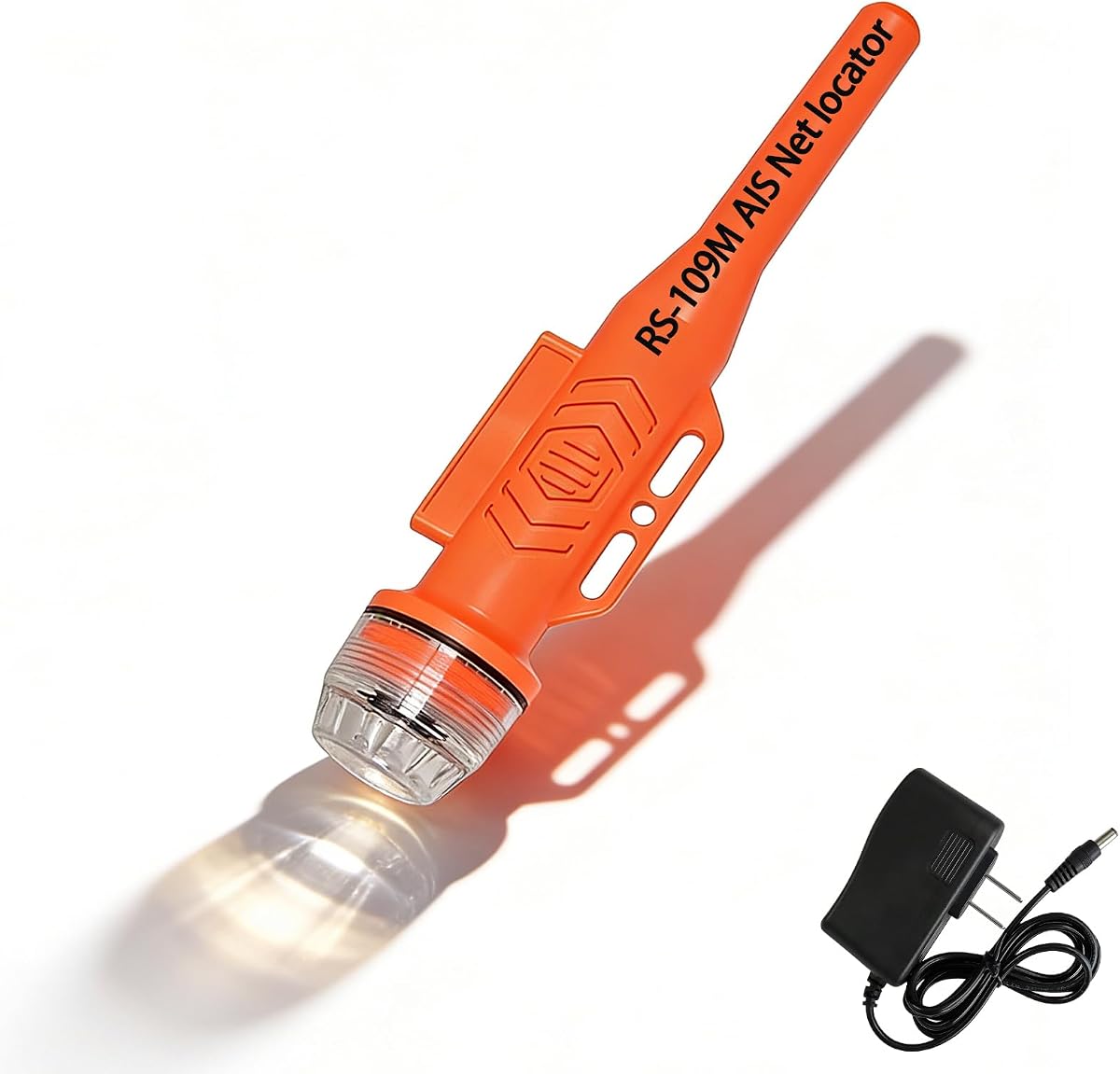
The single pack version of the RS-109M provides the same reliable tracking capabilities as the two pack option but for a single asset. It is perfect for tagging individual buoys or nets on smaller vessels.
We may earn a commission when you buy through this link, at no additional cost to you.
With a high sensitivity GPS module it delivers precise location updates that ensure quick retrieval of gear. The waterproof design allows it to withstand prolonged exposure to water and marine elements.
Users appreciate the extended battery life which reduces the frequency of maintenance tasks. This efficiency is valuable for operations where equipment may be left in the water for long periods.
This tracker is an excellent choice for small scale fishing or research vessels. It balances cost and performance to provide essential location data without unnecessary complexity.
Precise GPS updates enable crews to locate lost gear quickly saving time and reducing the risk of losing valuable equipment in open water.
The fully sealed housing meets strict waterproof standards ensuring the unit functions correctly even after periods of submersion.
We may earn a commission when you buy through this link, at no additional cost to you.
The Icom M94D is a handheld VHF transceiver that includes an integrated AIS receiver. It offers a portable solution for monitoring nearby vessel traffic without the bulk of a fixed system.
We may earn a commission when you buy through this link, at no additional cost to you.
Its loud audio output ensures calls remain intelligible in noisy environments such as engine rooms or busy marinas. The 10 hour battery life provides extended operational time during long days on the water.
The Float and Flash feature adds safety by ensuring the radio is visible if dropped overboard. This feature combined with MOB distress capabilities makes it a vital tool for emergency preparedness.
This radio is ideal for small boats where space is limited but safety is a priority. It delivers essential communication and monitoring capabilities in a compact and durable form factor.
The integrated AIS receiver displays nearby traffic directly on the screen allowing crew to stay informed of surrounding vessels without needing a fixed chartplotter.
Float and Flash technology ensures the device remains visible if dropped overboard significantly increasing the chances of recovery and safe communication.
We may earn a commission when you buy through this link, at no additional cost to you.
The Icom M510 EVO is a fixed mount VHF transceiver designed to work with NMEA 2000 networks. It brings modern voice technology and integrated AIS data to a streamlined helm interface.
We may earn a commission when you buy through this link, at no additional cost to you.
Its compatibility with digital networking allows for seamless integration with chartplotters and other instruments. This enables operators to manage communication and data monitoring from a single interface source.
The unit delivers clear audio transmission and reception ensuring effective communication with other vessels and coastal stations. It is built to withstand harsh marine environments while maintaining consistent performance.
Boaters upgrading to a digital networked system will appreciate this unit's capabilities. It offers a robust platform for modern marine communication and data integration.
Support for NMEA 2000 allows the radio to connect directly with digital displays enabling advanced data sharing and centralized control.
Advanced voice processing ensures that communications remain clear and intelligible even in challenging acoustic conditions on the water.
We may earn a commission when you buy through this link, at no additional cost to you.
The Raymarine AIS700 is a Class B transceiver designed for use with Raymarine multifunction displays. It offers full transmit and receive capabilities to enhance situational awareness and safety.
We may earn a commission when you buy through this link, at no additional cost to you.
Its built-in antenna splitter simplifies installation by allowing a single antenna to serve both the VHF radio and the AIS unit. This feature reduces clutter and installation time significantly.
The use of SO-TDMA networking provides longer range and faster performance compared to older technologies. This ensures that traffic data is updated quickly and accurately even in high traffic zones.
While setup may be complex the integration benefits make it a strong choice for Raymarine users. It delivers reliable performance and simplified wiring for improved marine communication systems.
The built-in antenna splitter eliminates the need for external splitters reducing installation complexity and saving valuable space on the vessel.
SO-TDMA networking ensures that AIS data is transmitted and received with minimal interference providing more accurate traffic information.
We may earn a commission when you buy through this link, at no additional cost to you.
Selecting the right AIS transponder involves evaluating transmission class, connectivity options, and specific use cases to ensure your vessel meets safety and regulatory requirements efficiently.
Class A transponders are required for commercial vessels and large ships offering higher priority and transmission power. Class B units are suitable for recreational boaters and smaller crafts providing essential tracking with lower cost.
Assess your vessel size and regulatory requirements to determine which class fits your needs without overspending on unnecessary capabilities.
Modern transponders support various protocols such as NMEA 2000, NMEA 0183, and Ethernet for seamless integration with chartplotters. Ensure the unit you choose matches your existing navigation network to avoid compatibility issues.
Check the available ports and protocols before purchasing to ensure smooth data sharing between your AIS and other marine electronics.
Some units include an onboard display for real-time traffic views while others function as standalone receivers requiring external screens. Consider whether you have an existing plotter that can display AIS data or need a standalone unit.
If you lack a multifunction display, a transponder with a built-in screen simplifies installation and provides immediate visual access to nearby vessels.
Many transponders come with their own antennas or require an external antenna for optimal signal range. Verify whether the package includes a splitter if you need to share an antenna with your VHF radio.
Proper antenna placement and quality significantly impact signal reliability so ensure your installation plan accounts for antenna height and mounting.
Marine equipment must withstand harsh environmental conditions including spray, humidity, and accidental submersion. Look for units with high waterproof ratings such as IPX7 to ensure durability in wet environments.
A robust waterproof rating protects internal components from corrosion and water damage extending the lifespan of your equipment.
For portable or buoy trackers battery life is critical for continuous operation. Units with high capacity batteries or external power options allow for extended monitoring without frequent recharging or replacement.
Evaluate the expected duration of use to choose a unit that can operate throughout your intended mission or trip.
Advanced models include collision alarms, anchor watches, and dangerous target lists that alert operators to potential risks. These features enhance safety by reducing the workload on crew members during critical operations.
Prioritize units with audible and visual alarms if your operation involves navigating busy or hazardous waterways regularly.
Setting up MMSI codes and ship details should be straightforward to avoid delays in activation. Units with intuitive interfaces or USB connectivity make it easier to input and manage your vessel data.
Choose a model that offers simple configuration options to ensure your transponder is ready for operation quickly after installation.
Begin by installing the antenna at a high point on your vessel to maximize signal range. Use quality coaxial cables and secure all connections to prevent water intrusion and signal loss.
Power on the unit and configure your MMSI code and vessel details using the provided interface. Double check that the GPS has a clear view of the sky to ensure accurate position reporting.
Perform regular maintenance checks on battery levels and connection integrity. Keep the exterior clean and inspect ports periodically to ensure optimal performance throughout the boating season.
Class A transponders are mandatory for commercial vessels and offer higher transmission power and data priority. Class B units are designed for recreational boaters and provide essential tracking capabilities at a lower cost and complexity.
Some units come with their own antennas but many allow you to share a VHF antenna using a splitter. Check the specific model requirements and consult your manual to determine the best setup for your vessel.
While some units may function partially without GPS they rely on accurate position data to broadcast useful information. A stable GPS connection is essential for the system to provide reliable safety and tracking benefits.
The MMSI code is typically entered once during setup and does not need frequent updates. However if you change vessel ownership or registration details you should update this information to maintain compliance.
Regulations vary by region and vessel size. Commercial vessels and ships over a certain tonnage are usually required to carry Class A transponders while recreational boats may use Class B units voluntarily for safety.
If power is lost the unit stops transmitting which means other vessels cannot see your position. It is advisable to have a backup power source or ensure your electrical system is reliable to maintain continuous operation.
Whether you need a rugged portable tracker or a professional Class A transponder this guide highlights units that balance performance with practical features. Top choices include the Icom MA-510TR for integrated navigation and the RS-109M for budget buoy tracking.
Prioritize connectivity and alarm features that match your specific boating habits to ensure your system adds real value to your safety routine. A well selected transponder can be a critical tool in preventing accidents and improving navigation.
Prices and stock levels change frequently so verify current availability and details before finalizing your purchase decision. Keeping informed ensures you get the best value for your specific marine communication needs.