
RIGOL DHO924S
4.5Editor score
250 MHz bandwidth
Built-in signal generator
50 Mpts memory
Bode plot analysis
Digital oscilloscopes are essential tools for engineers and hobbyists who need to visualize electrical signals. They allow you to see voltage changes over time, making it easier to debug circuits and analyze signal integrity. Choosing the right one depends on your specific testing requirements and budget constraints.
We have carefully evaluated ten leading models based on their technical specifications, user feedback, and real-world performance. Our analysis covers bandwidth, sampling rates, channel counts, and additional features like protocol decoding. This ensures you get a comprehensive view of what each device offers.
Each pick in this guide highlights key strengths and potential trade-offs to help you make an informed decision. We include options ranging from budget-friendly handheld units to advanced benchtop models. Please note that prices and availability can change frequently, so check current listings before purchasing.
4.5Editor score
4.3Editor score

4.4Editor score
As an Amazon Associate we earn from qualifying purchases.
This side-by-side comparison highlights the core specifications and unique capabilities of each model to help you quickly identify the best fit for your testing environment.


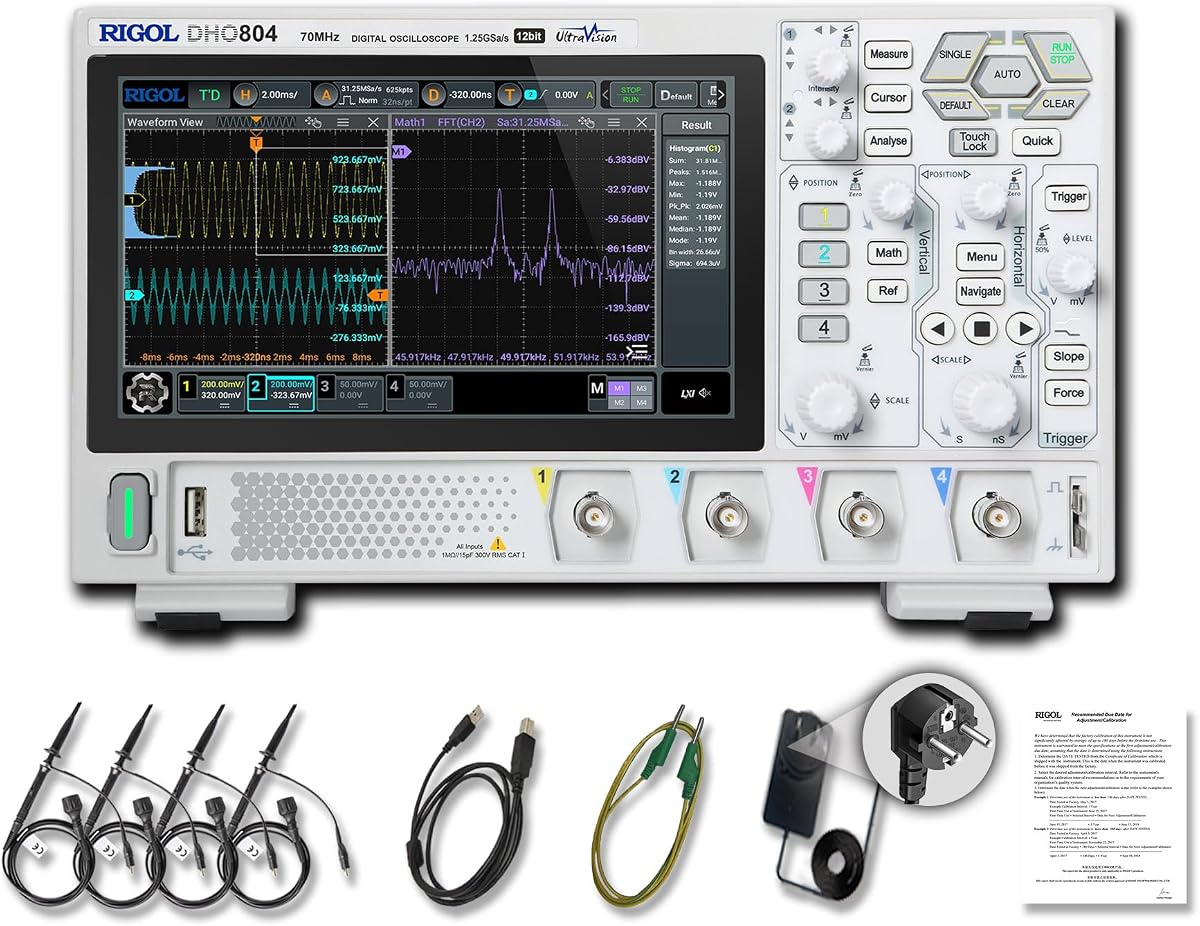
The RIGOL DHO804 stands out as a top contender for general-purpose digital oscilloscope needs. It offers a robust combination of channels and resolution that appeals to both professionals and serious hobbyists. The device consistently performs well in capturing detailed waveform data.
We may earn a commission when you buy through this link, at no additional cost to you.
Its 12-bit resolution provides significantly more vertical detail compared to standard 8-bit scopes. This feature is crucial for analyzing low-amplitude signals or noise on power rails. The four analog channels allow you to monitor multiple signals simultaneously without complex switching.
While the bandwidth is capped at 70 MHz, this is sufficient for many embedded and power applications. The only potential drawback is the initial setup time required to master its full feature set. These trade-offs are acceptable given the value it offers for the price point.
This scope is ideal for engineers working on embedded systems or power supply validation. If you need to correlate timing across multiple channels with high precision, this model delivers. It is a strong recommendation for anyone seeking a reliable benchtop tool.
The 12-bit resolution captures subtle voltage changes that standard scopes miss, improving noise analysis accuracy.
Built-in serial decode for CAN and SPI simplifies debugging complex communication buses without extra hardware.
We may earn a commission when you buy through this link, at no additional cost to you.
The RIGOL DHO924S represents the premium tier of digital oscilloscopes with advanced features for demanding tasks. Its 250 MHz bandwidth makes it suitable for high-speed digital and RF applications. The integrated signal generator adds significant value for testing and validation workflows.
We may earn a commission when you buy through this link, at no additional cost to you.
With a built-in arbitrary function generator, you can inject test signals directly without external equipment. The Bode plot analysis feature is particularly useful for loop stability testing in power electronics. Deep memory allows for long capture times without sacrificing sample rate.
The primary downside is the cost, which may be prohibitive for casual users. Additionally, specific probes are required to unlock all digital channel features. However, for professional labs requiring automation and detailed analysis, these costs are justified by the capabilities.
Choose this model if you need to perform frequency response testing or debug high-speed serial protocols. It offers a comprehensive solution that reduces the need for multiple instruments on your bench. It is a powerful tool for advanced engineering projects.
Bode plot analysis allows quick visualization of gain and phase margins for control loop stability.
LAN and SCPI support enable remote scripting and integration into automated test environments.
We may earn a commission when you buy through this link, at no additional cost to you.
The FNIRSI DPOS350P is a versatile handheld unit that combines oscilloscope, analyzer, and generator functions. Its 350 MHz bandwidth is impressive for a portable device, allowing field work on high-frequency signals. The battery life supports extended usage away from power outlets.
We may earn a commission when you buy through this link, at no additional cost to you.
Beyond basic waveform viewing, this device includes a spectrum analyzer for EMI checks. The frequency response analyzer helps tune filters without needing separate equipment. The large touch screen makes navigation easier in cramped spaces. It is a powerful tool for field service engineers.
The interface can be overwhelming for beginners due to the number of features. The weight might be a factor for long-term handheld use compared to smaller scopes. However, the functionality packed into one unit reduces the need for carrying multiple devices.
This is an excellent choice for technicians who need multi-tool capability on the go. If you work with RF or analog filters in the field, the integrated tools save time. It is a strong candidate for field service and mobile testing scenarios.
FFT-based spectrum analysis helps identify noise sources and harmonic content directly on the device.
An 8000 mAh battery ensures several hours of continuous operation for mobile maintenance tasks.
We may earn a commission when you buy through this link, at no additional cost to you.
The RIGOL DS1102Z-E is a widely trusted model for entry-level digital oscilloscope users. It delivers a 100 MHz bandwidth with deep memory as standard. The waveform capture rate is high enough to catch intermittent glitches effectively. It is often recommended for educational labs and home workshops.
We may earn a commission when you buy through this link, at no additional cost to you.
Its standard deep memory allows you to see both high resolution and long time windows. The display uses intensity grading to highlight signal density and noise. This visual feedback is crucial for debugging complex digital protocols. Serial decode is supported for common interfaces like I2C.
The scope lacks a touchscreen, which might feel dated compared to newer models. Two channels are limiting if you need to monitor more signals at once. These limitations are acceptable for basic troubleshooting and learning electronics fundamentals. It remains a top seller for good reason.
Buy this if you need a dependable benchtop tool for general electronics work. Its user feedback is excellent, indicating reliable long-term performance. It is a safe choice for students and hobbyists starting their testing journey.
This model is widely used in schools due to its intuitive controls and extensive online tutorials.
Digital phosphor style display reveals noise and jitter that static screens might hide.
We may earn a commission when you buy through this link, at no additional cost to you.
The FNIRSI 2C53T combines an oscilloscope with a multimeter and signal generator. This trio of tools makes it highly versatile for basic circuit debugging. The 50 MHz bandwidth is sufficient for audio and low-frequency digital work. Its battery operation makes it easy to move between workstations.
We may earn a commission when you buy through this link, at no additional cost to you.
Having a multimeter built-in saves the hassle of carrying a separate tool. The signal generator can output standard waveforms up to 50 kHz. This allows for loop testing and basic response checks without extra gear. The design is tailored for students and hobbyists.
The resolution and sample rate are lower than benchtop models. This limits its use for high-speed signal analysis. However, the convenience and price point are significant advantages. It is a practical solution for general maintenance and repair tasks.
This model is perfect for users who need multiple measurement tools in one device. If you often work on low-frequency electronics or simple repairs, it offers great value. It is a solid budget-friendly choice for comprehensive testing.
The built-in multimeter allows quick DC voltage and resistance checks alongside waveform analysis.
Battery powered operation means you can take measurements to the point of failure easily.
We may earn a commission when you buy through this link, at no additional cost to you.
The FNIRSI DSO152 is a truly pocket-sized digital oscilloscope for basic checks. With a 200 kHz bandwidth, it handles low-frequency audio and control signals well. Its small size allows you to keep it in a toolkit for quick field trips. It is a fantastic entry point for beginners.
We may earn a commission when you buy through this link, at no additional cost to you.
Despite its size, it offers essential triggering modes and a clear LCD display. The one-button auto setup simplifies the process for non-experts. Battery life is decent for a device of this form factor. It provides immediate access to visual measurements when tools are scarce.
The low bandwidth restricts it to low-speed applications. High-speed digital signals will not display correctly. However, its price is unbeatable for the convenience it offers. It is not a replacement for benchtop gear but a useful supplement.
Choose this if you need a cheap way to see basic signals on the move. It is excellent for maintenance techs who deal with motor control or audio systems. It is a handy tool for hobbyists who want visual feedback.
Fits easily in a pocket, making it ideal for quick checks during maintenance visits.
Auto setup reduces the need to understand deep configuration for simple signal checks.
We may earn a commission when you buy through this link, at no additional cost to you.
The Hantek DSO2D15 offers a strong balance of price and performance for bench work. Its 150 MHz bandwidth covers a wide range of testing needs. The arbitrary waveform output is a useful feature for injecting custom signals. It is a popular choice for labs on a budget.
We may earn a commission when you buy through this link, at no additional cost to you.
Support for serial protocol decoding makes it useful for embedded systems debugging. The 14 trigger modes provide flexibility for stabilizing complex waveforms. While the interface is traditional, it gets the job done reliably. It performs well for general purpose signal viewing.
The software can sometimes lag compared to premium brands. However, the hardware itself is robust and capable. For the cost, it delivers more features than many competitors. It is a strong contender for those seeking maximum value.
This scope is ideal for hobbyists or small labs needing more than entry-level specs. If you need to analyze bus traffic or generate custom signals, it works well. It is a highly recommended option for budget-conscious engineers.
Delivers 150 MHz bandwidth at a price point that competes with much lower spec units.
Built-in arbitrary waveform generator allows custom test patterns without external gear.
We may earn a commission when you buy through this link, at no additional cost to you.
The FNIRSI 1013D Plus brings a large touchscreen to the digital oscilloscope category. The 7 inch display makes it easy to view multiple channels clearly. Battery life is exceptional for a portable benchtop device. It supports storing over a thousand screenshots locally.
We may earn a commission when you buy through this link, at no additional cost to you.
Waveform management features allow you to organize and browse captured data efficiently. The touch interface reduces the need for physical knobs and buttons. This improves workflow speed for frequent users. It is a modern take on the portable scope design.
Touch latency can be noticeable during rapid parameter changes. Battery performance varies with screen brightness settings. Despite these issues, the user experience is superior to older styles. It is great for those who prefer a tablet-like experience.
Buy this if you want a modern interface for your oscilloscope needs. It works well for students and professionals who appreciate visual organization. It is a versatile tool for field and lab work.
A large high contrast screen makes viewing complex waveforms easier in bright environments.
Extensive storage allows you to keep a library of waveforms without connecting to a PC.
We may earn a commission when you buy through this link, at no additional cost to you.
This product entry currently lacks verified technical details for a full review. The listing suggests a potential model but does not confirm specifications. It is crucial to check the current page for the most accurate info. Users should compare this with confirmed models before buying.
We may earn a commission when you buy through this link, at no additional cost to you.
Without specific bandwidth or channel data, we cannot evaluate performance objectively. Please check the product page for details on sample rate and memory. This ensures you select a device that meets your technical requirements. It is a placeholder for potential future products.
The listing indicates availability on Amazon but details vary by vendor. Be cautious about claims that are not supported by official documentation. Always look for verified purchase reviews to gauge real-world performance. It is better to wait for clear specs.
Until confirmed data is available, this slot remains reserved. We recommend checking our other detailed reviews for proven alternatives. If this model is updated, we will review it promptly. It is a reminder to verify specs before purchase.
Always confirm the model number and specs on the official site before ordering.
Product pages may update often so check the description section for latest features.
We may earn a commission when you buy through this link, at no additional cost to you.
Selecting the right digital oscilloscope requires understanding key technical factors that impact performance.
Bandwidth determines the highest frequency signal your scope can measure accurately. For digital signals, ensure bandwidth is at least 4 times the clock frequency. Lower bandwidth might work for basic analog signals but will miss high speed harmonics.
Always choose a bandwidth that exceeds your maximum signal frequency to avoid inaccurate readings.
Sampling rate refers to how many times per second the scope captures the signal. Higher rates allow for better detail capture of fast edges and transients. A general rule is 5 to 10 times your bandwidth for adequate resolution.
Verify the sample rate to ensure you are not losing critical waveform details during capture.
The number of channels dictates how many signals you can view at once. Two channels are sufficient for simple differential or single ended tests. Four channels are needed for complex digital protocols or power supply analysis.
Plan for future needs as upgrading your scope later can be more expensive than buying more channels now.
Memory depth defines how many data points you can store in a single capture. Deep memory lets you view a long time span without slowing down the sample rate. This is vital for debugging intermittent glitches over long durations.
Look for models with at least 20 Mpts memory depth for flexible time window viewing.
Handheld scopes are lightweight but usually have lower performance specs. Benchtop models offer better displays and features but are fixed in place. Consider where you will use the device most often to balance these needs.
Choose a battery powered unit if you frequently work on equipment away from a main power source.
Serial protocol decoding helps interpret data from buses like I2C or UART directly. This removes the need to decode bits manually from raw waveforms. Many modern scopes include these features as standard options for convenience.
Check if the scope supports the specific protocols used in your electronics projects.
Connectivity like USB and LAN allows you to export data or control the scope remotely. This is essential for documentation and automated testing workflows. Ensure the interfaces match your existing lab computer and software setup.
USB is standard but LAN offers better speeds for large data transfers in a network environment.
A high resolution screen makes waveforms easier to read and analyze visually. Color displays with intensity grading help highlight noise and jitter levels. Touchscreen options can improve navigation speed but rely on battery power.
Prioritize display clarity if you spend long hours looking at waveforms to reduce eye strain.
To use your digital oscilloscope, start by connecting the probe to the channel input and ground. Set the voltage and time scale knobs to match your expected signal range. Use the auto set button to quickly stabilize the waveform for initial viewing.
Calibrate your probes before taking measurements to ensure accuracy. A simple calibration signal is often available on the scope front panel. Adjust the probe trimmer until the square wave looks perfectly square without overshoot.
Store your scope in a cool dry place to protect the internal electronics. If using a battery powered model, charge it fully and store at 50 percent charge if unused. Clean the screen with a soft dry cloth to avoid scratches on sensitive touch surfaces.
Digital oscilloscopes sample the signal and store it in memory allowing for analysis and storage. Analog scopes display the signal in real time but lack digital processing features. Most modern tools are digital because they offer better precision and protocol decoding.
Match the bandwidth to your highest frequency signal component. For digital square waves ensure bandwidth is four times the fundamental clock rate. Choosing less bandwidth will distort your signal and hide high frequency noise.
Yes but entry level models with lower bandwidth are sufficient for audio frequencies. You can visualize waveforms and measure amplitude distortion accurately. Ensure the probe supports AC coupling to remove DC offsets during listening tests.
Jitter can be caused by unstable trigger settings or noisy signals on the probe. Check the trigger source and level settings to stabilize the waveform. If noise persists verify your ground connection is short and secure.
Deep memory allows the scope to capture more data points over longer periods. This is useful for capturing rare glitches without losing sample rate. More memory provides flexibility between long duration and high detail viewing.
Typically each channel needs its own probe to maintain signal isolation. Probes are often sold in pairs but check the box contents before buying. Using multiple probes on one channel reduces resolution and channel availability.
Most scopes allow saving images to a USB drive or internal storage. Look for a screen capture or snapshot button on the front panel. Some models also support email or cloud upload via network settings for documentation.
Accuracy varies by model but ranges from 1 percent to 3 percent for voltage. Calibration certificates often list this in the technical specs section. Proper probe calibration is essential to maintain the stated accuracy levels.
We have reviewed ten digital oscilloscopes to highlight models for every budget and application. The RIGOL DHO804 stands out for its balance of channels and resolution. The FNIRSI DSO152 is ideal for those needing a portable entry point.
Prioritize bandwidth and memory depth when evaluating features for your workflow. Ensure the device matches your current testing needs before investing. Future needs may require higher sample rates or more channels to stay useful.
Please remember that prices and stock levels change frequently on the web. Always check the latest listings for the most accurate pricing before ordering. Verify the seller details to ensure you get the correct specifications.