
WOSPORTS Mini Trail Camera
4.2Editor score
Low power consumption design
Uses four AA batteries
Compact lightweight build
Compare the top 10 battery life trail camera models for 2026 based on power efficiency, solar compatibility, and long-term outdoor performance features.
Finding a trail camera with exceptional battery life is crucial for uninterrupted wildlife monitoring. Poor power management leads to missed moments and frequent maintenance trips in remote areas.
We evaluated ten top models focusing on power efficiency, solar options, and real-world endurance. Our analysis covers cellular and non-cellular units to help you choose the right power strategy.
Each pick highlights unique battery features and runtime capabilities. Prices fluctuate frequently so verify current deals before purchasing. Ensure your chosen model fits your specific outdoor monitoring needs.
4.2Editor score

4.3Editor score

4.2Editor score
This table compares the top ten battery life trail cameras. It highlights power sources, battery type, and key durability specs to help you find the longest lasting model.




The WOSPORTS Trail Camera stands out for its flexible power design. It supports standard AA batteries or optional lithium and solar inputs. This adaptability ensures long monitoring runs without constant battery swaps.
We may earn a commission when you buy through this link, at no additional cost to you.
Its 64MP photos and 4K video deliver sharp details. The 0.2s trigger speed captures fast wildlife movement effectively. Night vision relies on 940 IR LEDs to avoid scaring animals.
The unit requires separate purchases for lithium or solar power. This adds initial cost but offers significant long-term savings. Non-cellular connectivity means you must retrieve the SD card.
Buyers seeking a reliable non-cellular camera should consider this model. Its power flexibility makes it ideal for extended scouting trips. Ensure you buy compatible power accessories for best results.
Supports AA lithium and solar inputs for extended outdoor monitoring without frequent battery changes.
Captures 64MP photos and smooth 4K video with a wide 120 degree detection angle.
We may earn a commission when you buy through this link, at no additional cost to you.
The Moultrie Edge 3 cellular system optimizes battery life through smart alerts. Its AI technology filters false motions saving power. Rechargeable lithium packs reduce waste compared to disposable batteries.
We may earn a commission when you buy through this link, at no additional cost to you.
It connects to four major US networks automatically. Live Aim GPS maps camera locations instantly. The 40MP photos and 1080p video ensure high quality data transmission.
Users must pay a monthly data plan. This adds ongoing cost but eliminates SD card visits. Performance depends on cellular coverage in remote areas.
Choose this for hands-off monitoring on large properties. The power efficiency of its AI and rechargeable design is strong. Verify signal strength before deployment.
Moultrie AI detects bucks specifically reducing unnecessary photo captures and conserving battery resources.
Compatible with EDGE series lithium battery packs for months of dependable power in remote locations.
We may earn a commission when you buy through this link, at no additional cost to you.
The MAXDONE Solar Trail Camera offers a unique integrated power solution. Its built-in solar panel charges a 6000mAh battery continuously. This design minimizes battery replacements and maintenance visits.
We may earn a commission when you buy through this link, at no additional cost to you.
WiFi and Bluetooth app control allow quick photo previews. No subscription fees apply for the app. The 64MP photos and 4K videos capture crisp details day or night.
The camera only works with its own hotspot not home WiFi. Setup requires keeping phone close initially. Performance relies on adequate sunlight for charging.
Ideal for users wanting solar convenience without separate panels. The battery capacity ensures long runtime. Place in sunny spots for optimal power.
High-efficiency solar charging paired with 6000mAh battery provides uninterrupted power for year-round monitoring.
Free app access via built-in hotspot allows viewing and sharing photos without monthly subscription fees.
We may earn a commission when you buy through this link, at no additional cost to you.
Meidase P70 balances power efficiency with video compression. It uses H.264 technology to reduce file sizes extending SD and battery life. Solar compatibility extends uptime significantly in sunny locations.
We may earn a commission when you buy through this link, at no additional cost to you.
The 0.1s trigger speed is very fast for deer. Night vision uses bright 100ft LEDs to capture details. The compact design aids concealment in dense brush.
Users should buy a solar panel separately. This adds cost but offers continuous power. The display is functional but small for quick reviews.
Choose for fast-trigger needs with solar potential. Its file compression helps reduce write cycles on storage. Ensure batteries are fresh for best standby times.
H.264 tech compresses video files for quick downloads and seamless viewing without extra power load.
Compatible with SP350 solar panel for eco-friendly non-stop operation when paired with AA battery backup.
We may earn a commission when you buy through this link, at no additional cost to you.
The WOSPORTS Mini Trail Camera is designed for minimal power draw. It runs on just four AA batteries. Its compact size reduces weight and material usage aiding portability.
We may earn a commission when you buy through this link, at no additional cost to you.
30MP photos and 1080P videos are sufficient for scouting. The fast trigger and 850nm night vision deliver clear results. The low-power design supports longer standby times effectively.
Smaller sensors mean lower detail compared to 64MP models. Battery life is extended but capacity is limited. Ideal for short-term scouting or light monitoring.
Buy if portability and battery economy are priorities. Its small size makes placement easy. Verify battery quality for maximum runtime.
Compact design and low-power consumption support extended standby time for extended outdoor use with 4 AA batteries.
Small camouflage body blends naturally into environments reducing disturbance to wildlife and human observers.
We may earn a commission when you buy through this link, at no additional cost to you.
GardePro E5S uses three PIR sensors for rapid detection. This enables a lightning-fast 0.1s trigger. It runs on 8AA batteries. solar panels for continuous power.
We may earn a commission when you buy through this link, at no additional cost to you.
Its non-cellular operation saves significant power. You must retrieve the SD card to see results. The 64MP photos and 1296P HD videos are sharp.
Battery life depends on activity levels. Fewer false triggers help save power. Solar option adds cost but ensures reliability in remote zones.
Best for hunters needing quick captures. Its low-power mode is excellent for long-term setups. Buy solar panel separately for best uptime.
Three PIR sensors enable a lightning-fast 0.1s trigger speed perfect for fast-moving deer and wildlife.
Supported by 8xAA batteries and optional SP350 solar panel ensuring reliable power even in remote areas.
We may earn a commission when you buy through this link, at no additional cost to you.
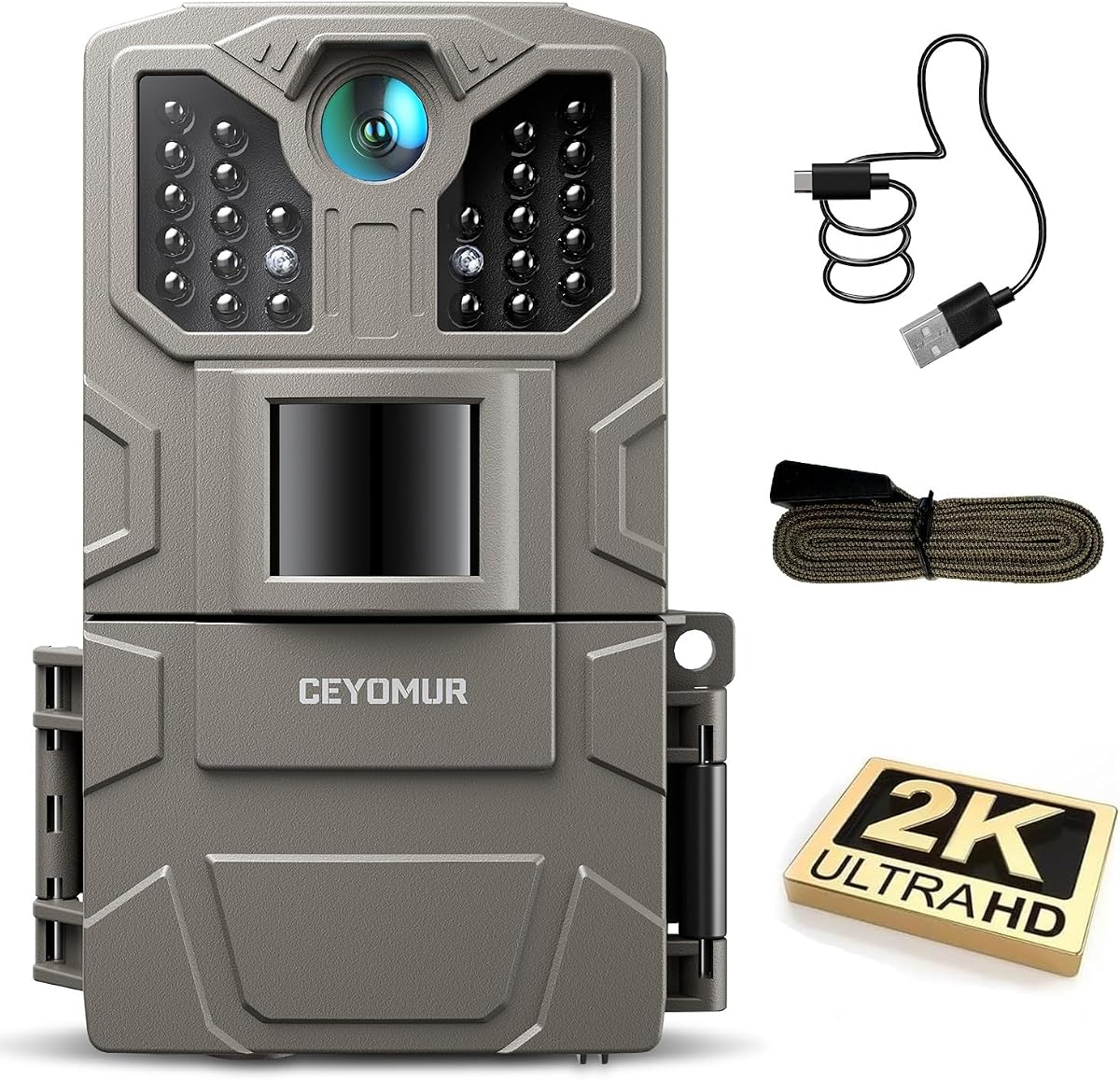
CEYOMUR trail camera simplifies battery management for beginners. It uses standard 8AA batteries. Its integrated design makes setup faster in the field without flipping covers.
We may earn a commission when you buy through this link, at no additional cost to you.
36MP photos and 2K videos provide good detail. The fast trigger speed ensures you capture moving wildlife. Controls are placed on one side for convenience.
Battery performance relies on quality AA cells. No included SD card means extra purchase needed. Basic interface may lack advanced features.
Choose for simple and reliable monitoring. Its design reduces setup time. Ensure fresh batteries are used for best performance.
Integrated lens screen and controls on one side make setup faster and more convenient in the field.
24pcs 850nm Infrared LEDs produce brighter and sharper nighttime images for wide range monitoring.
We may earn a commission when you buy through this link, at no additional cost to you.
This 2-pack kit helps cover multiple areas simultaneously. Each camera consumes little power using 4AA batteries. The included 16GB SD cards simplify setup instantly.
We may earn a commission when you buy through this link, at no additional cost to you.
30MP photos and 1080P videos are clear for wildlife. Its low-power design helps extend standby time. Camouflage helps blend into forests effectively.
Total battery cost is lower per unit. Setup is quick and requires no tools. Resolution is standard for the price.
Ideal for broad monitoring without cellular fees. The dual pack value is strong. Buy quality AA batteries for best runtime.
Get more coverage with the 2-pack kit allowing simultaneous monitoring of multiple outdoor locations easily.
Each camera comes with a 16GB SD card included making setup easier without needing to purchase additional accessories.
We may earn a commission when you buy through this link, at no additional cost to you.
The WOSODA Mini 4 Pack offers the most batteries in a bundle. It includes 16 AA batteries and 4 SD cards. Each camera runs on 4 AA for low power.
We may earn a commission when you buy through this link, at no additional cost to you.
30MP photos and 1080P videos capture decent detail. Its compact design ensures extended standby time. Camouflage blends well into natural environments.
Cost per camera is lower than buying singles. Setup is simple and complete. Resolution is adequate for standard scouting needs.
Best for property-wide surveillance. Its ready-to-use kit reduces initial hassle. Ensure proper battery installation for full runtime.
Includes 4pcs 16GB SD cards and 16pcs AA batteries ensuring immediate setup without extra purchases.
Only needs 4 AA batteries with compact design offering extended standby time under same conditions.
We may earn a commission when you buy through this link, at no additional cost to you.
This 2-pack combines high performance with efficient power. Each unit uses 8AA batteries or supports solar panels. Non-cellular operation minimizes power use for long stays.
We may earn a commission when you buy through this link, at no additional cost to you.
64MP photos and 1296P HD video are sharp. The 0.1s trigger with 3 PIR sensors is fast. Rugged weather-resistant design handles harsh conditions.
Battery swaps are frequent without solar. Total cost is higher than mini models. SD card must be purchased separately.
Choose for high-quality dual coverage. Its solar readiness ensures long-term stability. Verify local battery access for maintenance.
2-pack setup ensures broad coverage while maintaining low power consumption and eco-friendly viewing.
Non-Cellular operation ensures minimal power use and fewer battery changes for extended outdoor monitoring.
We may earn a commission when you buy through this link, at no additional cost to you.
Selecting a battery life trail camera requires balancing power source, capacity, and runtime. Here are key factors to consider before buying.
Most trail cameras use AA batteries with 8 AA cells offering longer runtime than 4. Rechargeable lithium packs reduce waste but cost more upfront. Check if lithium batteries are compatible with your chosen unit.
Prioritize 8-battery units or rechargeable lithium packs for extended outdoor monitoring trips.
Solar panels can provide continuous power reducing battery changes. Many models allow pairing with separate solar panels. Look for dedicated solar-ready ports or built-in charging systems.
Ensure your camera supports solar to maintain uptime in remote sunny areas.
Cellular cameras transmit images remotely but consume more power. Non-cellular units save energy but require SD card retrieval. WiFi models reduce power usage for local monitoring.
Choose cellular only if remote access is essential despite higher power draw.
Fast triggers like 0.1s save power by capturing only necessary events. Slow triggers may waste battery on false positives. PIR sensor count influences detection accuracy.
Opt for fast triggers to minimize unnecessary photo bursts and conserve battery life.
940nm LEDs are stealthier but use more power than 850nm. Night vision duration affects overall battery drain. Consider low-glow options to balance visibility and power.
Use low-power night vision settings when possible to extend runtime.
Video consumes significantly more power than photos. Some cameras allow disabling video to save energy. Choose models with efficient compression like H.264.
Limit video usage to critical events to preserve battery life.
Large files fill memory faster causing more writes. Loop recording helps manage space. Ensure SD cards match your battery capacity.
Use high-speed SD cards to reduce write cycles and power draw.
Cold temperatures reduce battery efficiency. Insulation or external power sources may help. Choose rugged waterproof models for harsh weather.
Test batteries in local climates before long deployment.
Insert fresh high-quality AA batteries ensuring correct polarity. Charge lithium packs fully before deployment. This prevents early power loss in cold conditions.
Position the camera in shaded areas if using solar panels to prevent overheating. Clear vegetation around sensors to reduce false triggers. Test the angle and view.
Check batteries monthly if possible. Use waterproof covers during extreme storms. Remove SD cards safely to avoid corruption. Reset settings after long storage.
On average, 8 AA batteries last between two to six months depending on activity. High motion areas reduce this time significantly. Solar panels can extend this indefinitely with proper light.
Yes but check manufacturer specs for voltage compatibility. Standard lithium packs work in most models. Avoid low-voltage NiMH batteries which may trigger low battery warnings early.
Yes because data transmission consumes significant power. Modern cellular models with AI reduce this by filtering false alerts. Use high capacity packs for best performance.
Solar charging continuously refills the battery allowing near-unlimited runtime. Direct sunlight is required daily. Some panels work in partial shade but efficiency drops.
Batteries perform best between 50F and 85F. Extreme cold reduces chemical activity causing faster drain. Keep units insulated if placing in freezing areas.
Photos consume far less power than videos. Use video only for critical moments. Most cameras allow disabling video to extend runtime significantly.
Remove all batteries and leave the unit off for hours. Reinstall fresh cells. This resets internal power management circuits for accurate readings.
Lithium batteries perform better in cold weather and hold charge longer. They are pricier but reduce total replacement frequency. Alkaline works well in moderate climates.
The top picks like Moultrie Edge 3 and MAXDONE Solar offer diverse power solutions for different needs. Each model balances resolution and battery efficiency to suit various outdoor environments.
Prioritize solar compatibility if you monitor remote areas. Low power consumption and fast triggers extend battery life significantly. Ensure your SD card matches your activity level.
Prices change frequently so verify current deals before purchasing. Always check compatibility with batteries and solar accessories for the best experience.