
D-FantiX Battery Tester for AAA AA C D 9V Universal Battery Charge Checker
4.5Editor score
No battery required to operate
Analog color-coded scale
Compact and practical size
This guide compares the best battery tester for household batteries including digital analog and universal models to help you choose the right tool for your
Finding the right battery tester for household batteries ensures you never run out of power during critical moments. These devices help identify weak or dead cells quickly saving you time and money on unnecessary replacements.
We compared ten top-rated models based on compatibility accuracy ease of use and build quality. Each option was evaluated for its ability to handle various battery sizes from AA to 9V and button cells effectively.
Each pick highlights specific strengths like digital displays or analog simplicity. Prices may change so check current listings before purchasing. This guide helps you select the most reliable tester for your daily needs.
4.5Editor score

4.5Editor score

4.6Editor score
The following table provides a side-by-side comparison of all ten models to help you quickly identify the best fit for your specific household battery testing needs.

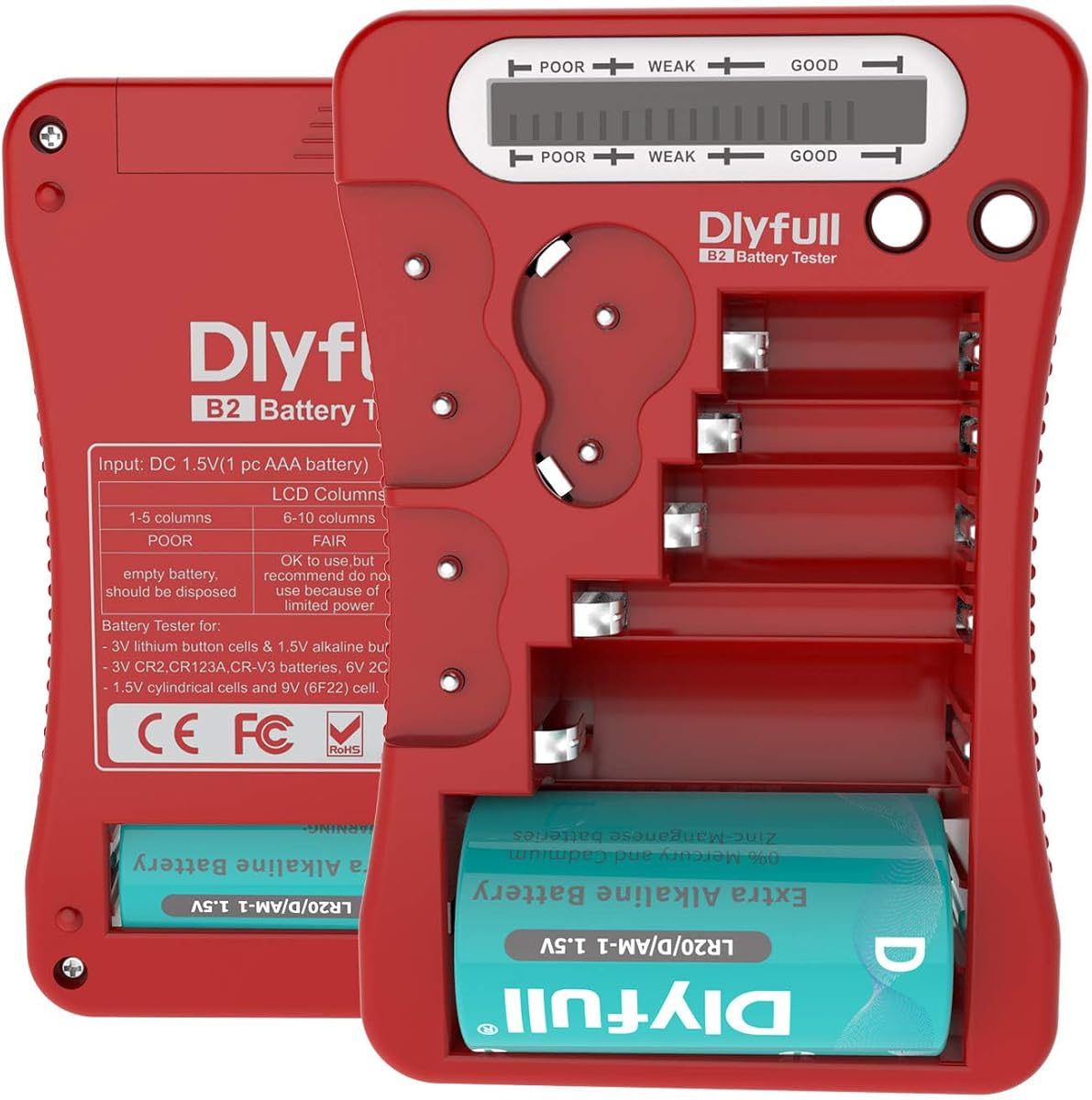


This Dlyfull Battery Tester stands out as a top choice for households needing reliable verification of battery health. With a strong rating and wide compatibility it handles everything from AA to button cells effortlessly.
We may earn a commission when you buy through this link, at no additional cost to you.
Its crisp LCD screen provides immediate visual feedback on whether a battery is good weak or poor. The quick results help avoid unnecessary recharges and protect your devices from power failures during critical moments.
While it does not support rechargeable batteries the unit excels with standard alkaline cells. The compact chassis and anti-slip finish make it easy to carry and use securely in any setting.
Anyone who manages multiple household devices will benefit from this tester. It helps save money by preventing premature disposal of usable batteries and extends the overall lifespan of your power sources.
This unit supports a vast array of cylindrical and button cell batteries ensuring you have one tool for most needs.
The analyzer displays health status using clear bars so you can instantly decide if a battery needs replacing.
We may earn a commission when you buy through this link, at no additional cost to you.
This versatile battery checker introduces real-load testing to ensure readings reflect actual performance under usage. It handles a wide variety of types including 1.2V rechargeables which many others skip.
We may earn a commission when you buy through this link, at no additional cost to you.
The automatic power-on and three-second shutoff features conserve power and ensure convenience. The clear display shows exact voltage and status making it easy to interpret results quickly.
Although it requires a separate AAA battery to run the accuracy and speed make it worthwhile. The durable design protects your batteries during testing with sturdy spring-loaded contacts.
Users seeking precise diagnostics will appreciate this model. It reduces guesswork and helps maintain a steady supply of functional batteries for all your daily electronics and tools.
By simulating a load the tester provides a true indication of battery capability rather than just open circuit voltage.
Unique detection for 1.2V rechargeables prevents incorrect testing and ensures safe and accurate results for NiMH types.
We may earn a commission when you buy through this link, at no additional cost to you.
Another strong offering from Dlyfull this checker emphasizes portability and ease of use. Its compact size makes it ideal for toolboxes or drawers where space is limited.
We may earn a commission when you buy through this link, at no additional cost to you.
The analyzer shows clear voltage readings and status bars so you can quickly identify weak cells. This helps prevent unexpected device failures caused by depleted power sources.
It is designed strictly for standard batteries avoiding confusion with rechargeable options. The sturdy build ensures it withstands daily handling while remaining easy to store anywhere.
For households needing a simple reliable tester this model fits the bill. It offers peace of mind and helps manage battery inventory efficiently without complicated procedures.
Its small footprint allows you to keep a tester handy without cluttering your workspace or storage areas.
Inserting the battery provides instant results on the LCD so no technical knowledge is required to interpret the output.
We may earn a commission when you buy through this link, at no additional cost to you.
This analog tester is an excellent budget option for checking standard household batteries. Its simplicity means there are no digital components to fail or batteries to replace.
We may earn a commission when you buy through this link, at no additional cost to you.
The color-coded scale clearly indicates good low or replace status at a glance. It works with both standard and rechargeable batteries offering broad utility for a minimal investment.
While it lacks the precision of digital readouts it is sufficient for general home maintenance needs. The lightweight build ensures it is easy to store and transport when needed.
Users looking for an affordable no-fuss solution will find this ideal. It helps prevent waste by ensuring you only replace truly dead batteries rather than guessing based on age.
Since it runs solely on the battery being tested you never need to worry about buying new cells for the tester itself.
The analog needle points to green yellow or red zones which makes understanding battery health immediate and straightforward.
We may earn a commission when you buy through this link, at no additional cost to you.
La Crosse offers a digital solution that simplifies testing with a straightforward three-step process. It supports a broad range of types including rechargeables and button cells for complete versatility.
We may earn a commission when you buy through this link, at no additional cost to you.
The LED display shows voltage and strength levels clearly so you know exactly how much life remains. This precision helps you manage power resources more effectively across multiple devices.
The design includes specific trays and touch contacts to ensure accurate connections for different shapes. While the tray requires gentle handling it provides reliable results with consistent performance.
Anyone who values simplicity and digital clarity will appreciate this unit. It balances ease of use with technical accuracy making it a premium choice for modern households.
You choose the appropriate range based on battery type ensuring the reading is accurate for alkaline or NiMH cells.
Dedicated contacts allow for testing small button cells which many standard testers overlook entirely.
We may earn a commission when you buy through this link, at no additional cost to you.
This value pack provides two compact testers so you can keep one in different locations. Both units operate without internal power relying on the battery being tested for functionality.
We may earn a commission when you buy through this link, at no additional cost to you.
The indicator bars give a clear visual of power levels allowing for quick sorting of good and dead batteries. Their light weight makes them easy to toss into a drawer or tool bag.
While the build is simple it is sufficient for occasional household checks. The dual pack ensures you always have a backup ready when one is lost or misplaced.
Households on a tight budget will find this deal compelling. It offers immediate practical utility without the cost of more complex digital units.
Having two units allows you to place one in your garage and another in the kitchen for easy access.
Like other analog models this tester draws power from the cell under test so no extra batteries are ever needed.
We may earn a commission when you buy through this link, at no additional cost to you.
Tenergy provides a compact tester with an LCD screen that offers precise voltage readings. It covers twelve different battery sizes making it a versatile addition to any home toolkit.
We may earn a commission when you buy through this link, at no additional cost to you.
The unit runs on one AAA battery which is included so it is ready to use immediately. This ensures you get consistent results without relying on the voltage of the cell being checked.
Its small footprint saves space while still providing detailed health information for your power sources. The durable contacts ensure reliable connectivity for accurate data every time.
This model is ideal for users who want digital accuracy in a portable format. It helps maintain device performance by ensuring only healthy batteries are installed in your electronics.
The LCD display gives exact voltage numbers so you can track battery health more accurately than analog models.
Covers a broad range from AA to specialized CR types ensuring you have a solution for almost any device.
We may earn a commission when you buy through this link, at no additional cost to you.
This analog tester features flexible test leads which allow for testing batteries that cannot fit into fixed slots. It supports a wide range of voltages including lantern and photo cells.
We may earn a commission when you buy through this link, at no additional cost to you.
The analog scale provides a quick visual indication of charge levels without needing batteries for operation. It is rugged and built to withstand use in workshops or garages.
The test leads add versatility but require care to prevent losing them during storage. For users needing to test odd-sized or hard-to-reach cells this flexibility is invaluable.
Ideal for maintenance professionals or DIYers this tool covers more ground than standard household testers. It ensures you can verify power in large batteries used for lighting or heavy duty devices.
The included leads let you probe batteries directly so you can test larger or uniquely shaped cells.
Supports 14 different battery ranges ensuring you can test everything from small button cells to 12 volt packs.
We may earn a commission when you buy through this link, at no additional cost to you.
The unique magnetic design ensures the battery stays in place during testing preventing accidental slips. This stable contact provides accurate readings consistently without needing to hold the unit manually.
We may earn a commission when you buy through this link, at no additional cost to you.
The classic analog display is easy to read and provides immediate feedback on battery health. It is built with premium materials to ensure long-term reliability in daily use.
Its compact build makes it easy to carry while the magnetic feature adds a layer of convenience for users who value speed. This design helps avoid errors caused by misalignment.
For anyone frustrated by wobbly contacts this magnetic unit is a strong upgrade. It simplifies the testing process and ensures you get reliable data every time you check a cell.
The tip grabs the battery so you do not need to steady it with your hand while the reading takes place.
The display uses a straightforward scale so you can understand the status without deciphering complex numbers.
We may earn a commission when you buy through this link, at no additional cost to you.
This digital checker provides a percentage reading that gives precise insight into remaining battery life. It supports a diverse range of types including specialized chemistries like LiFePO4 and Li-ion.
We may earn a commission when you buy through this link, at no additional cost to you.
The self-check feature ensures the tester is functioning correctly before you start testing your own batteries. This helps maintain confidence in the results you rely on for your devices.
It is lightweight and easy to carry despite offering advanced features. The included AAA batteries allow for immediate use without needing to buy extra power sources first.
For users who want detailed data like percentage levels this model is highly capable. It offers a modern approach to battery management with clear and actionable information.
The screen shows exact percentages so you can plan replacements before a device loses power unexpectedly.
Holding the button runs a diagnostic to ensure the unit is ready to provide accurate data when needed.
We may earn a commission when you buy through this link, at no additional cost to you.
Selecting the right battery tester involves considering compatibility accuracy ease of use and power requirements to ensure you get reliable results for your specific household needs.
Ensure the tester supports the specific sizes you use most often such as AA AAA C D or 9V. Some models also cover button cells and rechargeables which broadens utility for mixed battery inventories.
Choose a unit that covers all your common battery types to avoid needing multiple tools for different devices.
Digital models offer precise voltage readings and percentage levels which are great for detailed diagnostics. Analog models use color-coded scales which are faster to interpret for simple checks.
Decide between digital precision and analog speed based on how much detail you need when checking batteries.
Some testers require their own internal battery to operate while others run solely on the cell being tested. Internal battery models often offer digital features but add maintenance.
If you prefer no maintenance consider analog options that do not need any extra batteries to function.
Look for a compact lightweight design that fits easily into drawers toolboxes or pockets. A sturdy build with anti-slip finish ensures the unit lasts longer in daily handling.
Prioritize a pocket-friendly chassis if you plan to carry the tester to different rooms or locations.
Real-load testing models simulate actual usage to give a truer indication of battery performance than voltage-only checks. This is especially useful for determining if a battery can power high-drain devices.
Opt for real-load technology if you frequently power demanding electronics like flashlights or cameras.
Simple one-step insertion is ideal for quick checks without confusing interfaces. Automatic power-on or clear indicator bars help reduce the learning curve for all household members.
Select a tester with intuitive features that allow anyone in the family to check batteries effortlessly.
Quality construction with reinforced slots and spring-loaded contacts prevents damage to batteries during testing. Check for warranty coverage to protect your investment against manufacturing defects.
A strong warranty and robust build ensure your tester remains reliable over many months of use.
Prices vary from simple analog units to advanced digital models. Determine how much detail you need versus how much you want to spend to find the best value for your situation.
Balance cost against features to ensure you get the accuracy and convenience you need without overspending.
Always insert the battery in the correct polarity direction as marked on the tester to avoid inaccurate readings. If using a digital model select the appropriate voltage range before testing to ensure precision.
Store the tester in a dry clean place away from extreme temperatures to maintain its electronic components or analog mechanism. Regularly clean the contacts with a dry cloth to prevent corrosion or dirt buildup.
If your unit requires internal batteries replace them promptly when a low power warning appears to ensure consistent operation. For models without internal power simply inspect the external contacts for any signs of wear or damage.
Standard testers are often designed for 1.5V alkaline cells and may not accurately read 1.2V rechargeable batteries. Check the product specifications to confirm if the model supports NiMH or Li-ion chemistry before testing.
Digital testers need an internal power source to run their LCD screens and electronic circuits. This allows for features like voltage numbers and percentage displays which analog models do not require.
Most testers show a clear status like Good Weak or Poor along with voltage numbers. A reading below 1.2V for alkaline cells usually indicates the battery is weak and should be replaced.
Most household battery testers are safe for standard sizes but avoid using them on high voltage or specialized industrial batteries unless specified. Always follow the manufacturer guidelines to prevent damage or safety hazards.
Analog testers use a moving needle on a color-coded scale to show status quickly without needing extra power. Digital testers provide exact voltage numbers and percentages but require internal batteries to run.
It depends on the model. Some testers run on the battery being tested so you do not need extra power. Others include AAA batteries in the package but may need replacements over time.
Testing batteries every few months helps prevent unexpected device failures and ensures you have power when needed. Regular checks also help you avoid mixing old and new batteries which can damage electronics.
A tester measures voltage and charge but cannot directly detect leaks. However if you notice physical corrosion or residue on a battery stop using it and dispose of it safely regardless of the reading.
The top picks offer a range of options from affordable analog units to advanced digital testers with percentage displays. Each model excels in different areas such as real-load testing or magnetic stability to meet specific needs.
Prioritize compatibility and display clarity to ensure you get accurate results without hassle. Consider whether you need internal power or prefer a no-battery design based on your usage frequency.
Check current listings before buying to confirm the best price and availability. A reliable battery tester is a small investment that protects your devices and saves money on unnecessary replacements.