
Fender Quantum HD 2 USB-C Audio Interface
Ultra-high-fidelity 20×24 USB-C
MAX-HD mic preamps included
Auto Gain and Re-Amp outputs
This guide compares the top external sound cards for guitar to help musicians find the best audio interface for recording, streaming, and live performance
Finding the right external sound card for guitar is essential for musicians who want to capture their tone with precision. Whether you are recording at home or streaming live, a quality audio interface ensures your instrument is heard clearly without unwanted noise or latency issues that can ruin a performance.
We evaluated ten leading external sound cards based on their build quality, input options, converter performance, and software compatibility. Our comparison covers portable interfaces ideal for mobile recording as well as robust units designed for full studio setups with multiple instruments and microphones.
Each pick highlights key strengths like low-latency monitoring, high-resolution conversion, and included software bundles. Prices and availability can change quickly so check current listings before purchasing to ensure you get the best value for your specific musical workflow and budget requirements.
4.6Editor score

4.2Editor score
This side-by-side comparison helps you quickly identify which external sound card fits your recording needs best. We list key specifications for all ten products so you can compare input types, resolution, and special features at a glance.


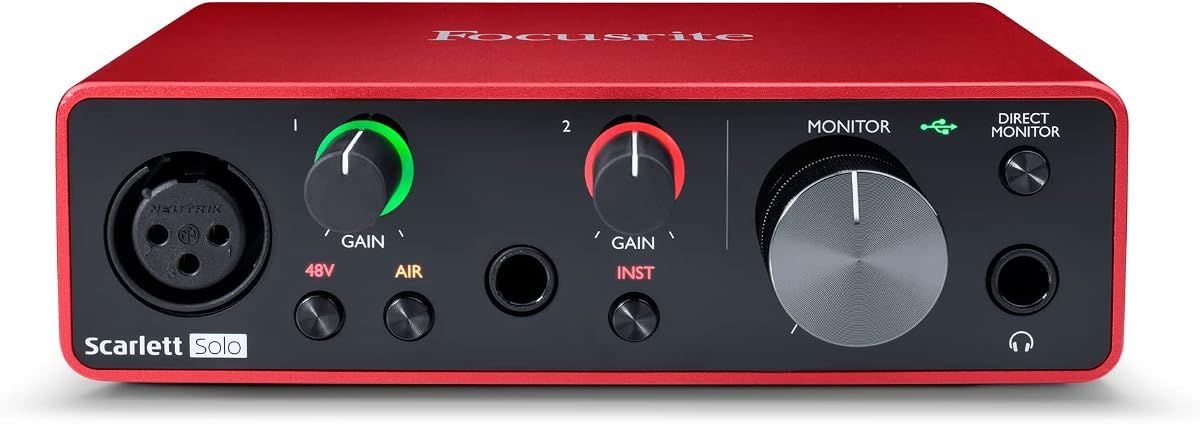
The Focusrite Scarlett Solo 3rd Gen stands out as a top choice for guitarists seeking studio quality recording in a compact package. Its 4.6 rating reflects widespread satisfaction among users who value its reliable performance and ease of use for both vocals and instruments.
We may earn a commission when you buy through this link, at no additional cost to you.
This interface features high-headroom instrument inputs that allow guitars to shine without clipping. The switchable Air mode adds extra clarity to acoustic instruments, while the Gain Halos provide visual feedback to ensure perfect recording levels every time you hit record.
While it lacks some advanced routing options found in larger units, the Solo focuses on core recording needs perfectly. The included software bundle like Pro Tools Intro and Ableton Live Lite provides everything needed to start producing music immediately upon unboxing.
Guitarists and home studio owners should buy this unit for its balance of price and professional sound. The three-year warranty offers peace of mind ensuring your investment is protected against manufacturing faults wherever you are located in the world.
Achieve brighter recordings with the high performing mic pre-amps that deliver clarity and depth to your tracks.
Includes essential effects and instruments so you can create and record music right away without extra costs.
We may earn a commission when you buy through this link, at no additional cost to you.
The Fender Quantum HD 2 delivers ultra-high-fidelity audio recording with MAX-HD mic preamps designed for pristine instrument capture. Although the rating is currently N/A due to its new release, its features promise professional clarity for studios and serious creators alike.
We may earn a commission when you buy through this link, at no additional cost to you.
Unlocking the complete Fender Amp & FX Pack through the Studio app gives users access to authentic models that are essential for crafting inspiring guitar tones. The interface also supports ADAT expansion for hybrid studio growth with sixteen digital inputs.
Advanced features like dual re-amp outputs and loopback routing streamline workflows for streaming and podcasting. However the complexity and cost make it best suited for professionals rather than casual hobbyists looking for simple plug-and-play solutions.
Professionals needing top-tier conversion and expandability should consider this unit. The perpetual license for Fender Studio Pro ensures you have a complete suite for recording mixing and mastering as your skills grow and production needs become more demanding.
Register your interface to claim the full collection of authentic Fender amp models and effects for guitar tones.
ADAT and S/PDIF I/O add sixteen digital inputs allowing for hybrid studio growth as your setup expands.
We may earn a commission when you buy through this link, at no additional cost to you.
The MAONO PS22 Lite offers high-resolution recording at 24-bit/192kHz with a dynamic range of 106dB ensuring your sound is clear and realistic. Its 4.2 rating highlights its value for recording enthusiasts and streamers who need reliable performance without breaking the bank.
We may earn a commission when you buy through this link, at no additional cost to you.
Whether you are a musician or an enthusiast, the dedicated instrument input allows you to adjust impedance and get guitar effects quickly. The included ProStudio Routing Software provides virtual channels and loopbacks for low-latency output essential for live broadcasts.
While the compact design is easy to hold it may feel less robust than premium units. However the intuitive modes for recording and live broadcast make it easy to switch setups efficiently saving valuable time during creative sessions.
Beginners and content creators should buy this interface for its versatility and ease of use. Its compatibility with popular DAW software and Mac or Windows ensures you can start making music today with the included USB cables and manual.
Capture every detail of your sound with 24-bit/192kHz resolution that ensures realistic audio fidelity.
ProStudio Routing Software opens up possibilities with virtual channels and loopbacks for your broadcasts.
We may earn a commission when you buy through this link, at no additional cost to you.
The M-AUDIO M-Track Duo is a versatile audio interface designed to cover podcasting recording and live streaming needs. With a 4.4 rating it delivers pristine recording every time with 48kHz audio resolution that suits most home recording projects effectively.
We may earn a commission when you buy through this link, at no additional cost to you.
Be ready for anything with two combo XLR inputs that handle microphones and instruments with phantom power for condenser mics. The transparent Crystal Preamps guarantee optimal sound from all your microphones ensuring your voice and instruments are captured accurately.
For monitoring the unit offers a headphone output and stereo outputs with a USB/Direct switch for zero latency. While the included MPC Beats software is useful for production it may not appeal to musicians focused solely on live guitar recording without extra features.
Musicians who need a simple yet capable interface for vocals and instruments should choose this. The low cost and portability make it an ideal choice for on-the-go recording where high-fidelity audio is required without complex setup steps.
Record guitar and vocals with two combo XLR inputs that support line and instrument signals with phantom power.
Includes MPC Beats Software complete with essential production tools from Akai Professional to get started.
We may earn a commission when you buy through this link, at no additional cost to you.
The Fender AudioBox GO is an ultra-compact interface designed for guitarists and producers who need studio quality recordings on the move. With a 4.0 rating it delivers 24-bit/96 kHz converters that ensure clear audio for music and podcasts alike.
We may earn a commission when you buy through this link, at no additional cost to you.
Unlock the complete Fender Amp & FX Pack to access authentic models for crafting inspiring guitar tones. The dedicated TS instrument input is optimized for guitar and bass ensuring transparent recording while the XLR mic input supports detailed vocal capture.
Although it offers zero-latency headphone monitoring the limited physical controls may require software adjustments for mix balancing. The bus-powered design makes it effortless to use with any laptop or mobile device without needing extra power supplies.
Traveling musicians and podcasters should buy this unit for its portability and included software tools. The six-month trial of Fender Studio Pro offers a powerful entryway into recording allowing users to upgrade when they are ready for advanced features.
Access a full collection of authentic Fender amp models and effects for crafting inspiring guitar and bass tones.
Enjoy zero-latency headphone monitoring with mix control for real-time tracking without any delay or lag.
We may earn a commission when you buy through this link, at no additional cost to you.
The Sound Blaster Play! 3 is a simple USB audio adapter that brings 24-bit 96kHz sound to any computer without installing drivers. Its 4.5 rating reflects its reliability for users who just need better audio playback quality without complex recording setups.
We may earn a commission when you buy through this link, at no additional cost to you.
This adapter works straight out of the box and is compatible with all analog headsets from earbuds to gaming headphones. The downloadable software provides powerful audio enhancements and optimized profiles for multiple earphone brands to improve your listening experience.
It is important to note that this device is designed for playback rather than input-based recording for guitars. While it improves sound output quality it lacks instrument inputs required for capturing music performances directly into your computer.
Casual users and gamers who want better audio without recording should choose this adapter. Its low price and simplicity make it a perfect solution for enhancing sound output from a PC without needing a full audio interface setup.
No drivers needed as it works straight out of the box with any computer system instantly.
Downloadable control panel software gives powerful audio enhancements and optimized profiles for brands.
We may earn a commission when you buy through this link, at no additional cost to you.
The StarTech 7.1 USB Audio Adapter adds up to 7.1 channels of audio through a single USB port to your computer. With a 4.0 rating it is a reliable choice for users needing multiple channel output options for gaming or surround setups.
We may earn a commission when you buy through this link, at no additional cost to you.
This external sound card supports analog and digital audio output using 3.5mm jacks with volume controls and mute buttons built in. It supports 44.1KHz and 48KHz sampling rates ensuring standard quality playback for various applications on your PC.
While it offers SPDIF optical input passthrough it is generally not designed for instrument recording needs. The easy installation and plug-and-play support make it convenient for upgrading PC sound without complex driver installations.
Gamers and movie watchers seeking surround sound capabilities should buy this adapter. It is a cost-effective solution for adding 7.1 channel audio to a laptop or desktop that lacks these features natively on board.
Adds up to 7.1 channels of audio through a single USB port for immersive audio experiences.
Features easy-to-use volume controls and mute buttons for quick adjustments without software.
We may earn a commission when you buy through this link, at no additional cost to you.
The Synido A10 delivers pristine 24-bit/48kHz resolution capturing every nuance of your performance with professional clarity. Its 4.4 rating highlights its utility for musicians who value its wireless backing tracks and zero-latency monitoring features.
We may earn a commission when you buy through this link, at no additional cost to you.
Stream backing tracks directly from one phone to the recording phone without cables so you can focus entirely on your performance. The advanced dual-core chip ensures zero-latency monitoring making it perfect for recording guitars with accurate playback.
Designed with a sturdy aluminum alloy body this compact interface is both portable and durable for travel. While the sample rate is lower than studio units it is sufficient for most practice and composition needs without compromising sound quality.
Modern musicians needing a portable solution for practice and recording should buy this interface. Its ability to record while charging your phone ensures you never interrupt a session due to battery life during long practice or streaming hours.
Stream backing tracks directly from one phone to the recording phone without cables so you focus on performance.
Sturdy aluminum alloy body is compact and durable so you can carry it effortlessly anywhere you go.
We may earn a commission when you buy through this link, at no additional cost to you.
The Cubilux CB5 converts the USB port of your laptop into 2 stereo microphone jacks and 1 line-in jack with multiple output options. With a 4.4 rating it is a solid choice for podcasters and streamers needing flexible connection options for microphones and speakers.
We may earn a commission when you buy through this link, at no additional cost to you.
The built-in advanced chip enables it to capture crisp and precise sound with decent clarity up to 96 KHz/24-bit. By assigning independent device names to each interface it makes it easy to record multi-track audio for complex projects.
While it is great for connecting microphones it does not offer dedicated instrument inputs for guitar recording specifically. The portable design ensures no need for an external power source allowing you to record wherever inspiration strikes without heavy gear.
Streamers and podcasters needing a hub for multiple inputs should choose this unit. Its integration with a Hi-Res DAC ensures clean and pristine sound for your performance allowing for professional audio content creation on a budget.
Converts USB port into multiple jacks letting you connect microphones and instruments and headphones as needed.
Easy to record multi-track audio by assigning independent device names to each interface in software.
We may earn a commission when you buy through this link, at no additional cost to you.
The Cubilux 7.1 USB Surround Sound Card supports sample rates up to 384KHz for Hi-Res music playback. With a 4.1 rating it is a strong option for those who value high-fidelity listening without needing to record instruments directly into a computer.
We may earn a commission when you buy through this link, at no additional cost to you.
The headphones output supports resolutions from 16-bit to 24-bit allowing you to enjoy your favorite Hi-Res music on streaming services. Its full aluminum alloy housing ensures no-loss transmission of an audio signal without static or ground noise interference.
It includes a line-in input but is primarily optimized for audio output and gaming environments. Note that it does not support Windows XP or Windows 7 limiting its compatibility with older systems and legacy operating environments.
Audiophiles and gamers wanting surround sound and high resolution should buy this card. Its compact design and plug-and-play operation make it a reliable tool for enhancing sound on laptops that lack built-in high-quality audio hardware.
Headphones output supports up to 384KHz/24-bit for enjoying Hi-Res music on your favorite streaming platforms.
Full Aluminum alloy housing enables full isolation of electronic interference for clear signal transmission.
We may earn a commission when you buy through this link, at no additional cost to you.
Choosing the right external sound card for guitar involves understanding your recording needs and technical requirements. We break down the essential factors to consider before making a purchase decision.
Look for dedicated instrument inputs like TS or TRS jacks that are optimized for high-impedance guitar signals. This ensures your instrument is captured with the correct impedance to preserve tone clarity and avoid signal loss. Some interfaces offer combo XLR/TRS inputs which are versatile but dedicated inputs are preferable for guitarists.
Always verify the interface has a dedicated instrument input for best results. If you plan to record vocals too, combo inputs are a practical compromise.
Sampling rates like 48kHz or 96kHz and bit depths of 24-bit provide the fidelity needed for professional recordings. Higher rates capture more frequency detail which is crucial for dynamic guitar tones. Most modern DAWs support these standards seamlessly for high-quality mixing.
Aim for at least 24-bit/48kHz resolution to ensure your recordings sound clear and professional without unnecessary processing loss.
Zero-latency monitoring is essential for guitarists to hear their performance in real time while recording. Look for features like a direct monitor switch or hardware mix controls that allow you to hear your instrument without delay from the computer. This prevents playing out of time with your backing tracks.
Prioritize interfaces with physical monitoring controls so you can play with confidence and avoid distracting delays during recording.
Many audio interfaces come bundled with DAW software, plugins, and amp simulators that add significant value. Check if the software is compatible with your operating system and whether it includes useful guitar-specific tools like amp models or effects. A full suite can save you money on additional purchases later.
Confirm the included software meets your needs and supports your preferred OS before buying to avoid compatibility headaches.
If you record on the go, a compact and lightweight interface with durable materials is a key consideration. Metal casings offer better protection against interference and physical damage than plastic alternatives. USB bus-powered designs remove the need for external adapters making setup easier.
Choose a build that fits your environment whether it is a rugged metal unit for travel or a plastic desktop model for home use.
High-quality preamps ensure your guitar and microphone signals are amplified without introducing hiss or noise. Look for units with transparent gain stages and high-headroom inputs that handle loud signals without clipping. Good preamps allow for cleaner tones at lower volumes.
Select an interface with transparent preamps and high headroom to keep your recordings clean and dynamic.
Consider whether you might need more inputs in the future for multi-instrument setups or vocal overdubs. Interfaces with ADAT expansion or multiple line outputs provide room for growth. This flexibility ensures your interface remains useful as your skills and studio needs evolve.
Opt for an interface with expandable I/O options if you plan to grow your studio setup over time.
Reliable drivers are critical for stable recording sessions without crashes or dropouts. Look for ASIO support on Windows or optimized Core Audio support on Mac for low latency and high stability. Check user reviews regarding software stability to ensure consistent performance.
Verify driver support for your OS and prioritize brands with a reputation for stable software performance.
Connect your guitar directly to the instrument input on the interface using a standard TS cable. Ensure the input gain is set using the control knob to avoid clipping while capturing a clean signal.
Use your DAW to select the interface as the audio device and enable ASIO or Core Audio drivers for low latency. Adjust your buffer size to balance between latency and system load based on your computer's power.
Store your interface in a dry place and avoid exposing it to extreme heat or moisture to protect its internal components. Regularly check cables for wear and keep connectors clean to maintain optimal signal quality over time.
Yes an external sound card provides dedicated instrument inputs that handle high impedance guitar signals correctly. Built-in computer audio ports often lack proper gain and impedance matching which can lead to noise and poor tone quality.
USB-C interfaces offer faster data transfer and better compatibility with modern laptops and mobile devices. USB-A is still widely supported but may require adapters for newer computers that lack these ports.
Most of these interfaces support both instrument and XLR microphone inputs. Check for phantom power options if you plan to use condenser microphones for vocals.
Zero-latency monitoring allows you to hear your playing in real time without delay from the computer. This helps you stay in time and perform confidently without distracting audio lag.
Not all interfaces include dedicated amplifier software but many premium or music-focused models like Fender units do. Check the product details to see if amp models are part of the package.
A sample rate of 48kHz or 96kHz is generally recommended for professional sounding guitar recordings. This provides enough frequency detail for mixing without creating unnecessary file sizes.
Many portable interfaces are bus-powered meaning they draw power from the USB connection without needing a separate adapter. Larger studio units often require external power for stable operation.
Download the latest drivers from the manufacturer's official website to ensure compatibility and stability. Avoid relying on outdated system drivers which may cause latency or connection issues.
We reviewed ten top external sound cards for guitar ranging from affordable mobile units to premium studio interfaces. Each option offers unique benefits whether you are recording at home or performing live.
Prioritize features like zero-latency monitoring and dedicated instrument inputs to ensure your tone sounds its best. The right interface will support your workflow and grow with your skills over time.
Always check current prices and availability as they can change quickly. Selecting the best fit for your specific needs ensures a smooth recording experience.