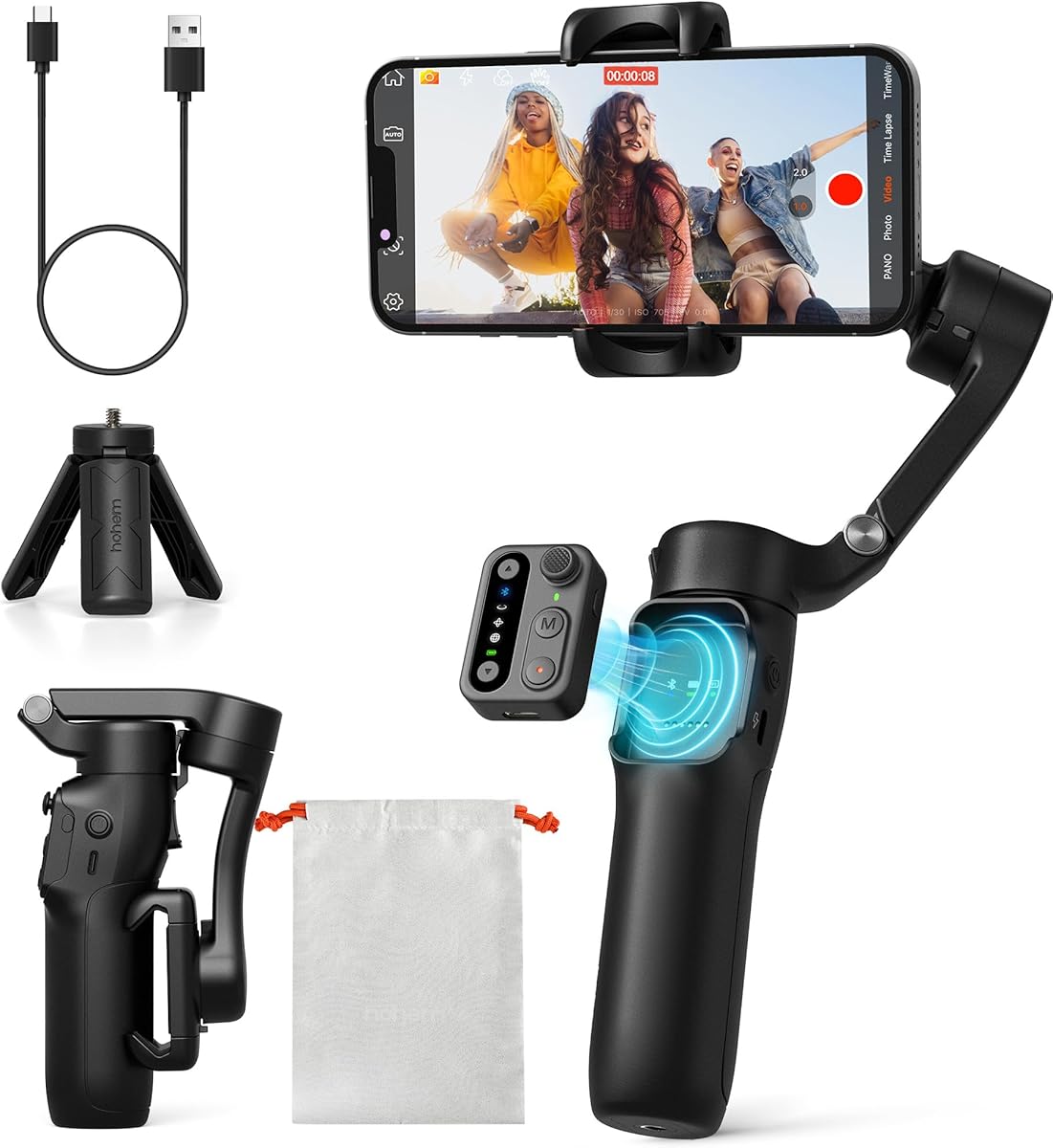
hohem iSteady X3 SE 3-Axis Gimbal Stabilizer for iPhone & Android, Black
4.2Editor score
Detachable remote controller
Portable foldable design
11-hour battery life
Capturing smooth footage while climbing requires specialized stabilization tools. A good gimbal for mountaineering must handle vibration, cold temperatures, and rugged terrain without failing during critical moments.
We compared ten leading models based on stabilization algorithms, battery endurance, and payload capacity. Each product was evaluated for its ability to support cameras during high-altitude treks and technical ascents.
Every pick highlights specific strengths like weather resistance or lightweight design. Prices fluctuate frequently, so verify current deals before purchasing to ensure you get the best value for your expedition gear.
4.2Editor score

4.5Editor score

4.5Editor score
As an Amazon Associate we earn from qualifying purchases.
This side-by-side comparison evaluates all ten models across key performance metrics. We analyze stabilization quality, battery duration, and compatibility to help you select the right tool for your climbing adventures.


The DJI Osmo Mobile 8 is a powerful gimbal stabilizer designed for phone users. It features robust 3-axis stabilization that ensures smooth footage even during active movement. With a 4.4 rating, it stands out for its intelligent tracking and long battery life.
We may earn a commission when you buy through this link, at no additional cost to you.
Its native tracking capabilities combine audio and lighting for enhanced video quality. The 360-degree pan rotation allows for immersive shots without manual rotation. The built-in tripod and selfie stick provide flexibility for various shooting angles.
Despite its strengths, the DJI Mimo app has been removed from Google Play, requiring manual downloads. This can be a hurdle for Android users. However, the physical design remains robust for outdoor use.
If you need a reliable phone gimbal for hiking and vlogging, this model offers excellent features. Its extended battery ensures you capture full-day adventures without power anxiety.
Native tracking with audio and lighting keeps subjects sharply in focus during dynamic outdoor activities.
Shoot for hours with a 10-hour battery that also charges your phone while filming.
We may earn a commission when you buy through this link, at no additional cost to you.
The DJI Osmo Mobile 7 delivers seamless stability for content creators on a budget. Its robust 3-axis stabilization ensures lossless footage during intense outdoor use. Weighing only 300 grams, it is easy to carry on long treks.
We may earn a commission when you buy through this link, at no additional cost to you.
ActiveTrack 7.0 allows for smarter tracking across diverse scenarios. You can film solo creations effortlessly thanks to the integrated foldable design and built-in tripod. The ergonomic handle ensures comfort during extended use.
Users should note that the app is no longer available on Google Play. This requires downloading from the DJI website. Despite this, the hardware remains reliable and lightweight for mobile filmmaking.
For budget-conscious mountaineers seeking quality stabilization, this gimbal is a solid choice. It balances portability and performance effectively for casual vlogging.
Weighing just 300 grams, this gimbal is easy to carry in any backpack without adding bulk.
Dual-lens enhanced tracking ensures subjects stay in focus even during fast action.
We may earn a commission when you buy through this link, at no additional cost to you.
The Hohem iSteady Pro 4 is designed specifically for action cameras. It features IPX4 splash proofing, making it ideal for wet or snowy conditions. With a 14-hour runtime, it lasts through long expeditions without needing a recharge.
We may earn a commission when you buy through this link, at no additional cost to you.
Bluetooth connection ensures low energy consumption and extends battery life. You can control your GoPro shutter directly from the gimbal. The 3-axis stabilization provides smooth results even during dynamic movements.
Be aware it does not support GoPro Hero 7 White or Silver models. Also, some features are limited for Insta360 cameras. However, for standard GoPro users, it is a powerful tool.
If you mount an action camera on a bike or climb, this gimbal offers reliability. Its weather resistance and battery life are key benefits for adventure sports.
IPX4 splash proofing allows outdoor shooting in rain or snow without damage.
14-hour battery life means you can film all day without interruptions.
We may earn a commission when you buy through this link, at no additional cost to you.
This version of the Hohem iSteady Pro 4 emphasizes quick release and weather resistance. You can mount or detach your camera in just 3 seconds. The IPX4 splash proofing ensures it survives rain or snow.
We may earn a commission when you buy through this link, at no additional cost to you.
It features the iSteady 5.0 anti-shaking algorithm for smooth video. The 600-degree Inception mode enables creative transitions. Battery life reaches up to 14 hours, acting as a power bank for your camera.
The limitation remains support for specific GoPro models. It cannot control certain cameras fully. But for general stabilization and weatherproofing, it performs exceptionally well.
For mountaineers needing quick camera swaps and reliability, this gimbal is suitable. Its rugged design and long battery support extended outdoor shooting.
Detach your camera in seconds for rapid gear changes in the field.
Unlock mind-bending transitions with the 600-degree Inception mode.
We may earn a commission when you buy through this link, at no additional cost to you.
The hohem iSteady X3 SE is a portable stabilizer for mobile devices. Weighing just 0.79 lbs, it folds into a pocket-sized tool. This makes it ideal for travelers who need to save space.
We may earn a commission when you buy through this link, at no additional cost to you.
It includes a detachable magnetic remote for hands-free control from up to 32 feet. The advanced iSteady 8.0 technology ensures smooth footage during jogging. Battery life offers 11 hours of continuous operation.
While powerful for beginners, it lacks advanced professional features. It is designed to be budget-friendly and easy to use. Most smartphone sizes fit within its payload capacity.
If you are a new vlogger or traveler, this gimbal is accessible. It removes the steep learning curve while delivering professional-grade content.
Weighing under a pound, this gimbal fits easily into small pockets.
A detachable remote allows shooting from up to 32 feet away.
We may earn a commission when you buy through this link, at no additional cost to you.
The DJI Osmo Mobile 7P enhances stability with advanced tracking. Its robust 3-axis stabilization ensures lossless footage during intense action. It pairs with a Multifunctional Module for audio and lighting.
We may earn a commission when you buy through this link, at no additional cost to you.
This model includes Dual-Lens Enhanced Tracking for smarter subject focus. You can capture wide selfies with the built-in extension rod. The 10-hour battery supports long shoots without interruptions.
Setup requires downloading the DJI Mimo app from the official site. This may be inconvenient for some users. However, the features provide significant value for professional creators.
If you prioritize high-quality audio and tracking, this gimbal is excellent. It adapts to various content needs effectively.
Integrated mic reception and lighting features elevate content quality instantly.
Dual-lens tracking ensures subjects stay sharp even during fast movements.
We may earn a commission when you buy through this link, at no additional cost to you.
The DJI RS 3 Mini is a compact stabilizer for interchangeable lens cameras. Weighing 795 grams, it is highly portable for travel. It supports payloads up to 2 kg with high-torque motors.
We may earn a commission when you buy through this link, at no additional cost to you.
A 1.4-inch touchscreen simplifies settings access. The 3rd-Gen RS Stabilization Algorithm delivers professional image stabilization. Bluetooth shutter control allows for easy photo capture.
Note that activation requires the DJI Ronin app, which may need manual download. This adds a step to setup. However, the hardware is robust and reliable for serious photographers.
If you carry mirrorless gear on expeditions, this gimbal offers stability. It balances portability with professional camera support.
Weighing less than a kilogram, it fits easily into carry-on luggage.
Supports most mirrorless combinations up to 2 kg with strong motors.
We may earn a commission when you buy through this link, at no additional cost to you.
The DJI Osmo Pocket 3 is an all-in-one vlogging camera. It features a 1-inch CMOS sensor for exceptional low-light performance. Advanced 3-axis mechanical stabilization ensures ultra-steady footage during hikes.
We may earn a commission when you buy through this link, at no additional cost to you.
The 2-inch rotating touchscreen allows horizontal and vertical shooting. ActiveTrack 6.0 keeps subjects in focus without manual control. Audio is enhanced with stereo recording and DJI Mic support.
While expensive compared to phone gimbals, it delivers cinema-quality results. The battery life is designed for long shoots. It removes the need for separate camera and gimbal.
If you want professional-quality footage without complex setup, this is ideal. Its compact form makes it easy to carry in a jacket pocket.
The 1-inch sensor captures stunning detail even in low-light conditions.
3-axis mechanical stabilization provides smooth footage on rough terrain.
We may earn a commission when you buy through this link, at no additional cost to you.
The FeiyuTech SCORP Mini-3-Pro offers versatile AI tracking. It supports mirrorless, compact, and action cameras. The built-in AI follows subjects without an external sensor.
We may earn a commission when you buy through this link, at no additional cost to you.
Its detachable handle doubles as a wireless remote. This allows for distance and low-angle shots. With 14 hours of battery life, it is ready for long shoots.
While powerful, it may be complex for first-time users. The payload is robust for professional gear. The AI tracking is precise even in challenging environments.
If you need flexible control and strong tracking, this gimbal is excellent. It adapts to various camera types effectively.
Built-in AI tracking follows subjects without an app or external sensor.
A detachable handle acts as a wireless remote for distance shots.
We may earn a commission when you buy through this link, at no additional cost to you.
The hohem iSteady MT3 Pro is a high-end stabilizer for diverse devices. It supports mirrorless, compact, action cameras, and smartphones. Its robust 2.5kg payload handles complex lens setups.
We may earn a commission when you buy through this link, at no additional cost to you.
An industry-exclusive detachable touchscreen remote provides wireless control up to 10m. Battery life reaches up to 20 hours. The iSteady 10.0 algorithm delivers rock-solid stability.
Due to its weight and price, it may be heavy for long treks. However, for professional video work, it offers unmatched versatility. Fast vertical switching saves time on set.
If you need premium control and high payload, this gimbal is ideal. It adapts seamlessly to complex workflows.
A detachable 1.4-inch remote allows you to frame shots from a distance.
Up to 20 hours of operation ensures full-day shooting without charges.
We may earn a commission when you buy through this link, at no additional cost to you.
Choosing the right gimbal requires balancing stabilization, weight, and battery life. Consider your primary camera type and the conditions you face on the trail.
Look for gimbals with advanced algorithms that smooth out micro-jitters from walking. High-end models use 3-axis stabilization to lock your camera in place during rapid movements. This ensures your footage remains professional even when climbing steep terrain.
Prioritize models with proven tracking and smooth motor response.
Expeditions often last hours without access to power. A gimbal with a 10-hour or 20-hour runtime is crucial for capturing full-day adventures. Some models even offer power bank features to charge your camera or phone.
Select a unit that meets or exceeds your typical hiking duration.
Mountaineering exposes gear to rain, snow, and dust. Look for splash-proof ratings like IPX4 to protect the electronics. Waterproofing ensures the gimbal survives sudden weather changes on the mountain.
Always check the IP rating before outdoor use.
Your gimbal must support the weight of your camera and lens. Lighter devices like smartphones need lower payloads, while mirrorless cameras require higher torque. Exceeding the payload can damage the motors or reduce stabilization.
Ensure the payload matches your current gear setup.
Weight matters when hiking long distances. Foldable and compact designs reduce bulk in your pack. Some models are designed to fit into pockets or small sleeves, saving valuable space.
Choose a lightweight gimbal to reduce fatigue.
Touchscreens and detachable remotes improve ease of use. Features like gesture control or AI tracking allow solo filming without assistants. These tools save time and ensure you capture shots without missing moments.
Opt for intuitive controls if you shoot alone often.
Always balance your camera on the gimbal before turning it on. This prevents motor strain and ensures smooth stabilization during movement.
Check your battery levels before heading out. If possible, carry a spare power bank to extend filming time on long days.
Clean the motors and gimbal joints regularly. Dust and moisture can cause malfunctions, so wipe down your gear after every trip.
Yes, but batteries drain faster in cold weather. Keep your gimbal close to your body or inside an insulated pocket to maintain battery efficiency. Also, avoid exposing the electronics to freezing moisture for prolonged periods.
Specialized gimbals exist for action cameras like GoPro. They offer quick release mechanisms and splash-proofing. However, ensure the mount matches your specific camera model before buying.
Loosen the locks and move the axes until the camera stays still without support. Most guides recommend using the app calibration tools for precise results. This prevents motor burnout.
While not mandatory, a gimbal significantly improves video quality. It removes the shake from walking and makes footage look professional. For serious content creators, it is a valuable investment.
Models with 10 to 20 hours are ideal for full-day hikes. This ensures you don't run out of power mid-expedition. Some even allow recharging your devices while filming.
Many modern gimbals support vertical shooting modes. Look for models with a fast vertical switch feature. This saves time when creating content for social media platforms.
We reviewed ten top gimbals tailored for mountain adventures. From lightweight phone stabilizers to robust camera options, each model serves specific needs for outdoor creators.
Prioritize battery life and weather resistance when choosing. These factors determine reliability in harsh environments. Also ensure payload capacity matches your equipment.
Always verify current deals and compatibility before purchasing. Prices and stock fluctuate. Choose the model that best fits your shooting style and trail conditions.