
KARDIAMOBILEKardiaMobile
4.4Editor score
Simple use without subscription
No Bluetooth or cords needed
Heart rhythm in 30 seconds
This guide compares the top 10 heart rate monitors for arrhythmia, evaluating accuracy, lead count, app features, and ease of use for home monitoring.
Managing heart health requires reliable tools that detect irregular rhythms quickly. A heart rate monitor for arrhythmia offers peace of mind by tracking your pulse and identifying potential issues before they become serious. Choosing the right device ensures you get accurate data to share with your healthcare provider.
We evaluated ten top-rated devices based on accuracy, ease of use, and feature sets. Each product was analyzed for its ability to detect common arrhythmias like atrial fibrillation. Our comparison highlights key differences in lead count, subscription requirements, and connectivity options to help you find the best fit.
Every pick below showcases distinct strengths for different user needs. Some offer medical-grade EKGs while others focus on continuous tracking. Prices and availability change frequently, so verify current details before purchasing. Read on to discover which monitor aligns with your health goals and lifestyle preferences.
4.4Editor score

4.4Editor score

3.6Editor score
This side-by-side comparison highlights the core specifications of all ten devices. From single-lead convenience to continuous wearable tracking, each option serves a unique purpose. Use this table to quickly identify which features matter most for your specific health monitoring needs.





The KardiaMobile 6L EKG stands out as the top choice for those needing detailed heart rhythm analysis. With a rating of 4.4 stars, it delivers medical-grade six-lead EKG results in just 30 seconds. Its FDA-cleared status ensures reliable determinations of conditions like atrial fibrillation and bradycardia without requiring a subscription.
We may earn a commission when you buy through this link, at no additional cost to you.
This device provides six times more data than standard single-lead monitors. You can detect AFib, tachycardia, and normal sinus rhythm directly on your smartphone. The ability to share detailed records with your doctor enhances communication and supports better health decisions. It is recommended by doctors globally for its precision.
While it does not work with pacemakers or ICDs, its accuracy is unmatched for general monitoring. The lack of a mandatory subscription makes it cost-effective over time. However, users must download the Kardia app and ensure their device is compatible before first use.
Anyone seeking a trustworthy home EKG solution should consider this monitor. It balances professional-grade features with user-friendly design. For proactive heart health management, the KardiaMobile 6L offers peace of mind and critical data when you need it most.
Six leads provide a comprehensive view of heart electrical activity, helping detect more arrhythmias than single-lead devices.
Unlike many competitors, this device functions fully without a monthly fee, saving money on long-term heart monitoring.
We may earn a commission when you buy through this link, at no additional cost to you.
For those on a tight budget, the KARDIAMOBILEKardiaMobile offers essential heart monitoring without unnecessary complexity. It holds a 4.4 rating and requires no Bluetooth, Wi-Fi, or PC to function. Simply place your fingers on the sensors for a clear rhythm check in 30 seconds.
We may earn a commission when you buy through this link, at no additional cost to you.
This device strips away extra features to focus on core functionality. It is ideal for users who only need to confirm if their heart rhythm is normal during occasional concerns. The simplicity ensures anyone can use it without technical knowledge or app dependency.
While it lacks the depth of multi-lead models, it remains a reliable tool for basic screening. The absence of hidden costs makes it accessible for long-term occasional use. However, users seeking detailed trend analysis might find its capabilities limited compared to advanced versions.
Buy this if you want a straightforward, cost-effective way to check your heart rhythm. It is perfect for elderly users or anyone avoiding subscription fees. Keep it in your bag for quick checks while traveling or at home.
This device works without needing to pair with a phone or download apps immediately upon first use.
Priced lower than most competitors, it offers a low-risk entry point into personal heart rhythm monitoring.
We may earn a commission when you buy through this link, at no additional cost to you.
The KardiaMobile 6L Max combines a six-lead EKG device with a one-year membership to KardiaCare. This bundle offers more than just raw data, providing board-certified cardiologist reviews and personalized health insights. It detects up to six common arrhythmias including PVCs and SVE.
We may earn a commission when you buy through this link, at no additional cost to you.
With the membership, you can tag EKGs with context like exercise or symptoms to identify trends. The ability to schedule telehealth appointments adds value for those needing professional advice without a hospital visit. Automatic email sharing ensures your doctor gets results quickly.
A key consideration is the renewal policy. After the first year, the membership auto-renews unless canceled, which could increase long-term costs if not managed. Additionally, the device itself requires the membership to unlock its full six-lead potential fully.
This option is best for users who want expert interpretation alongside their data. It is suitable for high-risk individuals needing frequent checks. The comprehensive support system makes it a robust choice for serious heart health management.
Cardiologists review your EKGs to provide detailed reports that help you understand your heart rhythm better.
Tagging EKGs with daily activities helps uncover patterns that might explain irregular heartbeats.
We may earn a commission when you buy through this link, at no additional cost to you.
The EMAY 6L offers a strong alternative with six-channel recording capabilities similar to medical devices. It connects to both smartphones via Bluetooth and PCs via USB, offering flexibility in data management. Users appreciate its high rating of 4.6 stars for reliable home health care.
We may earn a commission when you buy through this link, at no additional cost to you.
The software allows for sample mode, case review, and measurement settings, giving technical users control. A built-in rechargeable battery ensures you are not dependent on disposable cells. It is intended for over-the-counter use but provides detailed signal storage.
While not a hospital diagnostic device, it delivers robust data for tracking heart health. The lack of subscription fees is a significant advantage over some competitors. However, those without a PC or technical comfort might prefer simpler smartphone-only options.
Choose this if you want multi-platform connectivity without recurring fees. It is suitable for tech-savvy users who enjoy managing their own data. The six-channel support provides detailed insights for monitoring specific heart conditions at home.
Connecting to a computer via USB allows for deep analysis and case review software that exceeds mobile apps.
No subscription requirements mean all features are unlocked from day one with a single purchase.
We may earn a commission when you buy through this link, at no additional cost to you.
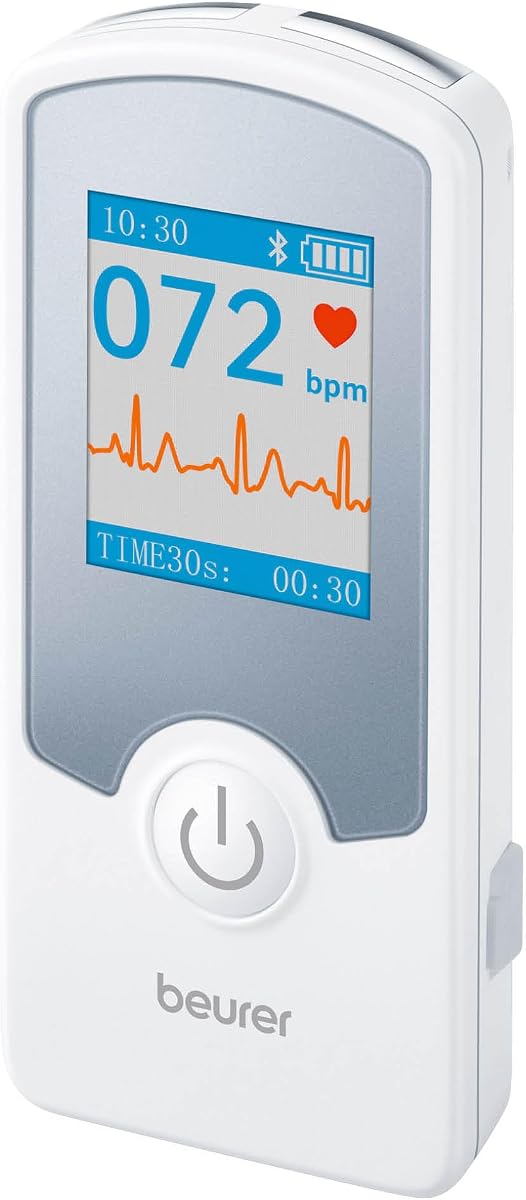
German engineering and FDA clearance make the Beurer Cardio Companion a trusted option for home monitoring. It measures heart rhythm in under 30 seconds and provides real-time results on a bright color display. The three-lead design captures more data than simple single-lead devices.
We may earn a commission when you buy through this link, at no additional cost to you.
Flexibility in measurement modes allows hand-to-hand, hand-to-wrist, or hand-to-leg use. The optional app saves up to 100 readings locally or unlimited ones via Bluetooth. Its rechargeable battery ensures readiness when needed. This balance of features suits diverse user needs.
Users should note that skin-to-skin contact during measurement affects accuracy. Also, like many devices, it is not suitable for pacemaker users. Despite this, the reliability and display quality offer excellent value without requiring a subscription service.
This monitor is ideal for those wanting visual feedback without a phone. It is a solid choice for seniors or anyone preferring a self-contained device. The combination of precision and portability makes it a practical daily health tool.
A built-in color display lets you see results immediately without needing to pair with a smartphone.
Multiple contact options allow you to find the most comfortable position for accurate readings every time.
We may earn a commission when you buy through this link, at no additional cost to you.
The Bioheart monitor shifts focus from spot checks to continuous 24/7 monitoring. Unlike devices used for minutes at a time, this wearable captures every heartbeat during sleep and activity. It is clinically accurate and trusted by thousands of cardiologists for precise analysis.
We may earn a commission when you buy through this link, at no additional cost to you.
The breathable fabric strap ensures comfort during daily life and exercise. AI-driven insights provide summaries and trends directly on your phone. You can share comprehensive PDF reports with physicians easily. A one-month subscription is included to kickstart your monitoring journey.
Note that ongoing use requires a subscription after the initial month, which impacts total cost of ownership. The price point is higher than standalone EKG devices. However, the ability to catch intermittent arrhythmias that spot checks miss offers unique value for specific cases.
This device is best for individuals with intermittent symptoms that occur during sleep or exercise. It suits those who want data beyond brief checks. If continuous tracking is your priority, the Bioheart provides unmatched insight into daily heart rhythms.
Continuous wear allows you to detect night-time arrhythmias that traditional devices might miss entirely.
Artificial intelligence processes your data to highlight patterns and alerts without needing human review initially.
We may earn a commission when you buy through this link, at no additional cost to you.
The HaSoCare ekg monitoring device is incredibly lightweight at just 60 grams, making it easy to carry anywhere. It records professional ECG data to detect heart health problems in time. The LCD screen allows you to view results without needing a phone.
We may earn a commission when you buy through this link, at no additional cost to you.
Multiple monitoring modes like hand to hand or hand to leg provide a full picture of your situation. Compatibility with both PCs and smartphones ensures you can transfer and share data easily. No subscription requirement keeps ownership simple and cost-effective.
While the design is functional, it is less advanced than some competitors in terms of software depth. The LCD is useful but lacks the vivid color of newer models. Still, it offers solid accuracy for the price point and practical daily use.
This device is perfect for travelers needing a portable heart check. It is ideal for those who prefer physical screens over apps. For general monitoring on a budget, this option delivers consistent results without complexity.
At 60 grams, this device is light enough to slip into any pocket or travel bag effortlessly.
Bluetooth and cable options let you share records with family or doctors quickly when needed.
We may earn a commission when you buy through this link, at no additional cost to you.
The Garmin HRM 200 is designed for active users who need real-time heart rate data during workouts. It transmits accurate variability data to compatible smartwatches and cycling computers. Its durable construction withstands sweat and rain with a 3 ATM water rating.
We may earn a commission when you buy through this link, at no additional cost to you.
The comfortable strap comes in two sizes to fit various body types well. It offers up to one year of battery life using a user-replaceable battery, reducing waste. Machine washability ensures hygiene after intense training sessions.
While excellent for fitness tracking, it does not provide medical-grade EKG detection for arrhythmias. It works best within the Garmin ecosystem. If your primary goal is workout intensity, this strap is a reliable partner. For medical rhythm analysis, consider an EKG device.
Buy this if you already use Garmin watches and need precise training data. It is built to last and handles tough conditions. For athletes wanting reliable performance metrics, the HRM 200 delivers consistent connectivity.
A user-replaceable battery lasts up to a year, minimizing maintenance during long training periods.
Multiple strap sizes ensure a secure fit that stays put during high-intensity activities without slipping.
We may earn a commission when you buy through this link, at no additional cost to you.
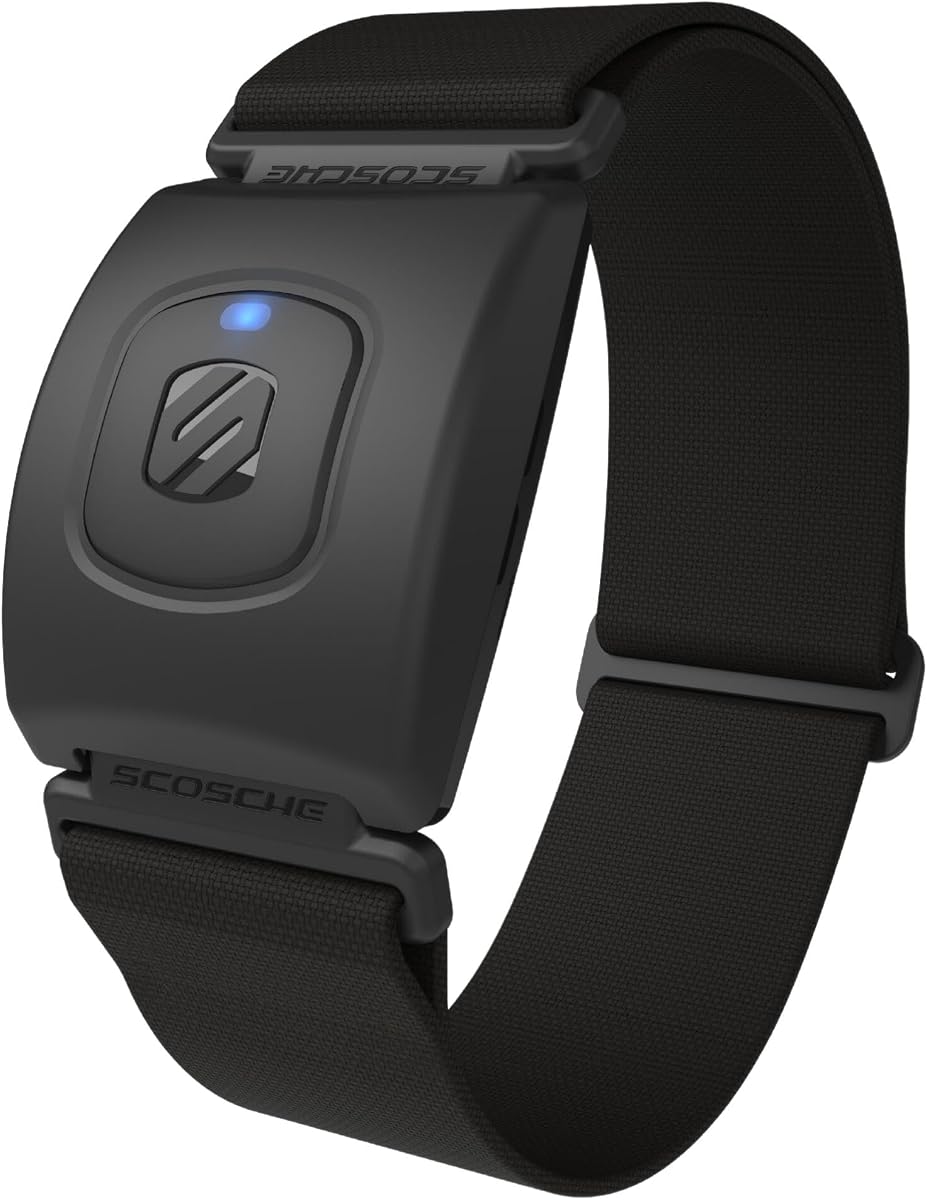
The Scosche Rhythm monitor delivers accurate real-time tracking for running and gym workouts. It uses optical sensors on the upper arm, offering a comfortable alternative to chest straps. Dual band radio connectivity ensures stable connections to sports watches and fitness apps.
We may earn a commission when you buy through this link, at no additional cost to you.
HRV mode captures precise RR interval data for recovery insights. The lightweight strap adjusts securely to your forearm or bicep. Up to 24 hours of continuous battery life means you can train for days without charging. IP68 waterproofing handles rain and sweat easily.
While optical sensors are great for fitness, they may not match EKG accuracy for arrhythmia detection. Placement on the arm requires proper positioning for best results. Still, its robust construction and battery life make it a top choice for performance monitoring.
This armband is perfect for cyclists and runners wanting reliable data. It is ideal for those who hate chest straps. For fitness tracking with added recovery insights, the Rhythm provides exceptional value and convenience.
Optical sensors on the arm eliminate skin irritation from chest straps while maintaining accurate tracking.
Recovery insights help you understand stress levels and sleep quality through heartbeat variation analysis.
We may earn a commission when you buy through this link, at no additional cost to you.
The Polar Ft1 Heart Rate Monitor watch simplifies fitness with a large, easy-to-read display. It helps improve fitness by showing manual heart rate target zones. The coded transmission avoids cross-talk with other devices, ensuring you get your data.
We may earn a commission when you buy through this link, at no additional cost to you.
It displays summaries of your latest workout to track progress. The wristband size is adjustable for comfort. One-button functionality makes it very easy to operate. It is a classic tool for those wanting straightforward tracking without app complexity.
While it focuses on target zones rather than medical detection, it offers reliability for general heart rate monitoring. It is less feature-rich than modern smartwatches. For users who prefer simplicity and dedicated hardware, this watch remains a solid option.
Choose this if you need a dedicated device just for heart rate. It is suitable for older adults who want minimal tech. For basic fitness tracking with clear targets, the Polar Ft1 delivers consistent performance.
With one button and a clear display, operation requires no technical knowledge or smartphone pairing.
Target zone features guide you to stay in the correct heart rate range for effective exercise.
We may earn a commission when you buy through this link, at no additional cost to you.
Selecting the right monitor depends on your health needs and lifestyle. This guide outlines key factors to consider for accurate and effective heart health tracking.
EKG devices detect rhythm irregularities like atrial fibrillation, while standard heart rate monitors only track beats per minute. For arrhythmia concerns, an EKG-capable device is essential.
Choose EKG monitors for rhythm analysis and standard monitors for fitness pace tracking only.
Single-lead devices are simple but limited to basic rhythm checks. Six-lead EKGs offer medical-grade detail, helping detect complex conditions by capturing more heart angles.
Prioritize six-lead models for deeper insight if you need detailed clinical data.
Some devices require monthly fees for access to results or advanced features. Others offer full functionality upfront. Evaluate long-term costs to ensure the device fits your budget.
Look for devices with no subscription to avoid recurring expenses.
Bluetooth connectivity allows easy data sharing with apps and smartphones. USB options provide stable connections to computers for backup. Ensure your device matches your preferred tech ecosystem.
Select models compatible with your phone or PC for seamless data management.
Rechargeable batteries reduce waste but may require frequent charging cycles. Disposable battery models might last longer between changes. Consider usage frequency when choosing power sources.
Pick rechargeable options for eco-friendliness or disposable ones for long-term convenience.
Simple finger placement is key for elderly users or those with limited mobility. Complex setups might hinder regular monitoring. Look for intuitive designs that require minimal steps.
Opt for user-friendly devices to ensure consistent and reliable use.
FDA-cleared devices provide assurance of accuracy and safety. This is critical for health decisions. Check if the manufacturer states regulatory approval for home use.
Prioritize FDA-cleared monitors for trusted and safe heart health assessment.
The ability to share records with doctors improves care. Look for email features or easy report generation. This ensures your provider gets timely data during visits.
Choose devices with sharing tools to facilitate better medical communication.
To get accurate results, ensure your skin is clean and dry before placing electrodes. Follow the device instructions for proper finger or chest placement. Stay still during measurement to avoid motion artifacts affecting the reading.
Store your monitor in a cool, dry place when not in use. Keep sensors clean with a soft cloth to prevent buildup. Replace batteries or charge as needed to maintain functionality.
Review readings regularly and track trends over time. Share significant findings with your healthcare provider promptly. Do not rely solely on home devices for diagnosis without medical advice.
FDA-cleared devices like KardiaMobile offer high accuracy for home monitoring. While not a replacement for hospital diagnostics, they are reliable for detecting common irregularities. Always consult a doctor for definitive diagnosis.
Most over-the-counter EKG monitors do not need a prescription. However, continuous wearables like Bioheart may offer optional medical oversight. Check device details for access requirements.
Many personal EKG devices advise against use with pacemakers or ICDs due to electrical interference. Consult your cardiologist before using any electronic heart monitoring device if you have implants.
Frequency depends on your medical needs. For occasional symptoms, check when you feel unwell. For chronic issues, your doctor may recommend daily or weekly monitoring to track trends.
Single-lead EKGs show one view of heart rhythm. Six-lead EKGs provide six perspectives, allowing detection of more complex arrhythmias. More leads generally mean more detailed data.
Most modern devices connect to smartphones via Bluetooth for best features. Some models offer standalone displays or PC connectivity as alternatives for users without mobile phones.
The KardiaMobile 6L EKG remains the top choice for balance of precision and simplicity. For continuous tracking, Bioheart offers unique insights for active users. Budget-conscious buyers may prefer the standard KardiaMobile.
Prioritize FDA clearance and no subscription fees to ensure long-term value and accuracy. Match your choice to your specific needs, whether it is spot checks or daily trends.
Prices and availability shift often, so check current offers before purchasing. Stay proactive about your heart health and consult professionals for medical decisions.