
Brother QL-820NWB Professional Ultra Flexible Monochrome Label Printer with Multiple Connectivity
4.3Editor score
Ethernet and wireless options
110 labels per minute speed
Up to 3 foot labels
This guide compares the top label printers for library use, evaluating connectivity, speed, durability, and software features to help you find the perfect
Libraries require precise labeling for cataloging, inventory, and organization. A reliable label printer ensures books, shelves, and materials are clearly marked. Choosing the right device depends on volume, connectivity needs, and durability requirements.
We compared ten top-rated label printers based on speed, connectivity, software compatibility, and build quality. Our analysis focuses on devices suitable for high-volume library environments while considering budget-friendly options for smaller branches or classrooms.
Each pick highlights key features, pros, and cons to guide your decision. Prices and availability change frequently, so verify current details before purchasing. This guide helps you invest in a tool that streamlines library operations effectively.
4.3Editor score

4.5Editor score
4.4Editor score
This table provides a side-by-side comparison of all ten label printers, highlighting key specifications like connectivity, print width, and special features to help you choose quickly.



The Brother P-Touch PT-D610BT stands out as the top choice for library environments due to its advanced connectivity and professional features. With a 4.5 rating, it balances ease of use with robust capabilities for high-volume labeling tasks.
We may earn a commission when you buy through this link, at no additional cost to you.
Its Bluetooth and USB connections allow multiple users to design labels from computers or mobile devices, which is ideal for dynamic library workflows. The large 20-character LCD display lets you preview labels before printing, ensuring accuracy and reducing waste significantly.
While it costs more than budget models, the efficiency gains from automatic cutting and 175 business templates justify the investment. The ability to store 90 frequently used labels saves time during repetitive cataloging tasks common in libraries.
Librarians seeking a reliable, professional-grade printer with minimal setup should choose this model. It handles asset management and inventory tracking seamlessly, making it a cornerstone for organized library operations.
Seamless Bluetooth and USB connectivity enables multiple users to create labels simultaneously from different devices.
The large color LCD display allows label preview before printing, reducing errors and waste in busy environments.
We may earn a commission when you buy through this link, at no additional cost to you.
The Brother QL-820NWB is a premium network label printer designed for large-scale library needs. Its flexibility with Bluetooth, Ethernet, and Wi-Fi ensures it integrates smoothly into complex institutional IT environments.
We may earn a commission when you buy through this link, at no additional cost to you.
Printing up to 110 labels per minute at 300 dpi makes it ideal for high-volume cataloging or shipping tasks. The standalone LCD screen allows operation without a connected computer, which adds convenience for on-the-spot labeling.
While it uses proprietary DK tapes, the ability to print black and red labels enhances visual hierarchy for different library sections. The 3-foot label length supports custom banners or large shelf signage effectively.
Libraries requiring robust network integration and high-speed output will find this printer indispensable. Its professional capabilities justify the higher price for institutions with demanding daily labeling requirements.
Multiple connectivity options including Ethernet and Wi-Fi ensure smooth integration into diverse library network systems.
Delivers 110 labels per minute at 300 dpi, perfect for handling large cataloging or inventory batches efficiently.
We may earn a commission when you buy through this link, at no additional cost to you.
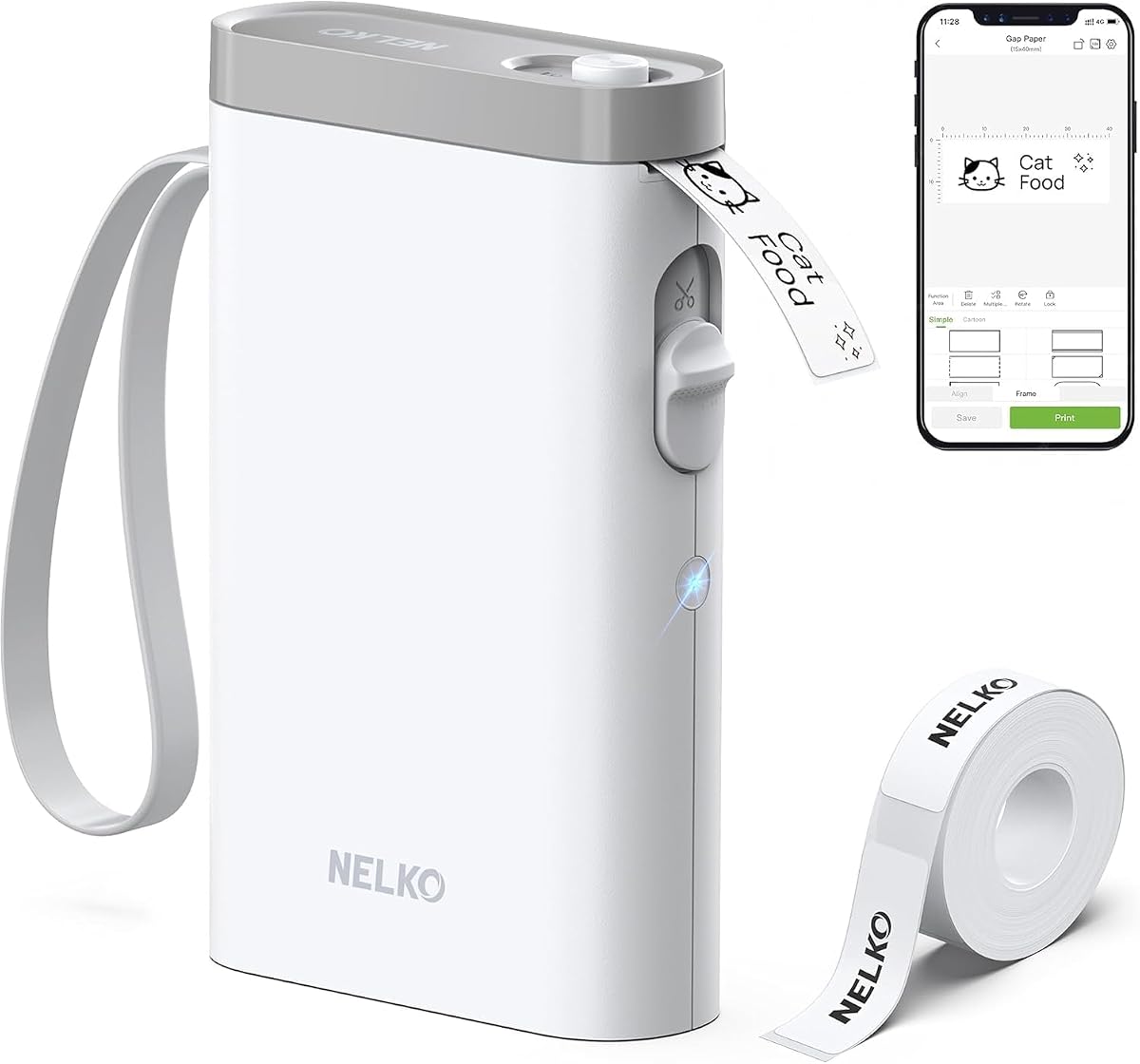
The Nelko P21 offers an affordable entry point for libraries needing quick, portable labeling solutions. With a 4.4 rating, it provides impressive features for its low price, including direct thermal technology and a rechargeable battery.
We may earn a commission when you buy through this link, at no additional cost to you.
Its app includes over 3600 icons and 750 templates, allowing creative labels for classroom supplies or storage bins without any cost. The compact design slips into a pocket, enabling staff to label items directly where they are stored.
While it lacks computer connectivity and uses monochrome printing, it excels for small-scale organization tasks. It is ideal for individual librarians or classroom teachers managing student materials efficiently.
Budget-conscious libraries or educational branches should choose this for daily labeling needs. It combines portability with functionality, making it a versatile tool for maintaining order without significant investment.
Lightweight and compact design allows staff to label items directly on shelves or desks with ease.
The free app provides thousands of icons and templates for creating custom labels without additional software costs.
We may earn a commission when you buy through this link, at no additional cost to you.
The Brother PT-M95 is a straightforward, portable label maker perfect for small library tasks. Its bundle includes four label tapes, offering immediate value for basic cataloging and organization needs.
We may earn a commission when you buy through this link, at no additional cost to you.
With a QWERTY keyboard and easy-view display, it simplifies text entry for quick shelf labeling. The 8 deco mode patterns and variety of frames add a personal touch to labels for student materials.
It lacks wireless features, so it relies on direct typing. However, its simplicity makes it accessible for staff members who prefer not to use apps or computers for labeling.
Libraries needing a simple, durable tool for basic labeling will find this bundle excellent. It is reliable for home and office environments alike, requiring minimal setup for immediate use.
Includes multiple label tapes for immediate use, reducing initial setup costs for new users.
Direct typing with a QWERTY keyboard avoids the complexity of app-based printing workflows.
We may earn a commission when you buy through this link, at no additional cost to you.
The Brother QL-810W balances speed and connectivity with its USB and Wi-Fi capabilities. It is perfect for libraries needing to share a single printer across multiple workstations efficiently.
We may earn a commission when you buy through this link, at no additional cost to you.
Printing 110 labels per minute ensures quick turnaround for address labels or book processing. AirPrint and Brother iPrint compatibility allow staff to print directly from mobile devices without complex setups.
While it supports black and red printing for better organization, it requires proprietary DK tapes which can add to ongoing costs. However, the efficiency gains often justify this expense for busy environments.
Libraries requiring networked printing with high speed should prioritize this model. It simplifies workflow by allowing multiple users to access the printer simultaneously via wireless connection.
USB and Wi-Fi connectivity enable multiple staff members to print labels from different locations easily.
AirPrint support allows printing directly from iOS devices, streamlining on-the-go labeling tasks.
We may earn a commission when you buy through this link, at no additional cost to you.
The SUPVAN T50M Pro stands out with its completely free app that requires no registration. This makes it easy for any library staff to start creating labels immediately without hurdles or hidden fees.
We may earn a commission when you buy through this link, at no additional cost to you.
It allows adding images from phones or PCs and supports square, round, and file labels for versatile organization needs. Auto label size recognition ensures smooth operation without manual setup adjustments.
While it is primarily app-dependent, the included three tapes and support for up to 2-inch labels offer substantial value for small branches. It handles barcodes and product info effectively for inventory management.
Libraries needing a budget-friendly solution with strong app features should consider this printer. It balances cost and functionality well, suitable for home or small business labeling tasks.
The app is entirely free with no registration, removing financial and procedural barriers to labeling.
Supports square, round, and file labels to meet diverse organizational requirements efficiently.
We may earn a commission when you buy through this link, at no additional cost to you.
The Brother QL-800 delivers high-speed output with its Plug and Label technology, allowing instant printing from Microsoft Word without extra software. This simplifies workflow for libraries managing documentation and file folders.
We may earn a commission when you buy through this link, at no additional cost to you.
With 93 labels per minute at 300 dpi, it handles large batches efficiently. The auto-cutter ensures precise label finishing every time, reducing manual trimming and improving professionalism.
While limited to USB, it excels in stability and speed. Dual-color printing with black and red adds visual distinction to labels, which is helpful for categorizing materials or highlighting priorities.
Libraries prioritizing speed and desktop integration should choose this model. It is reliable for continuous shipping or inventory labeling tasks where efficiency is paramount.
Plug and Label allows instant printing from Word, Excel, or Outlook without installing extra software.
Built-in auto-cutter provides professional finishes, reducing manual effort and waste.
We may earn a commission when you buy through this link, at no additional cost to you.
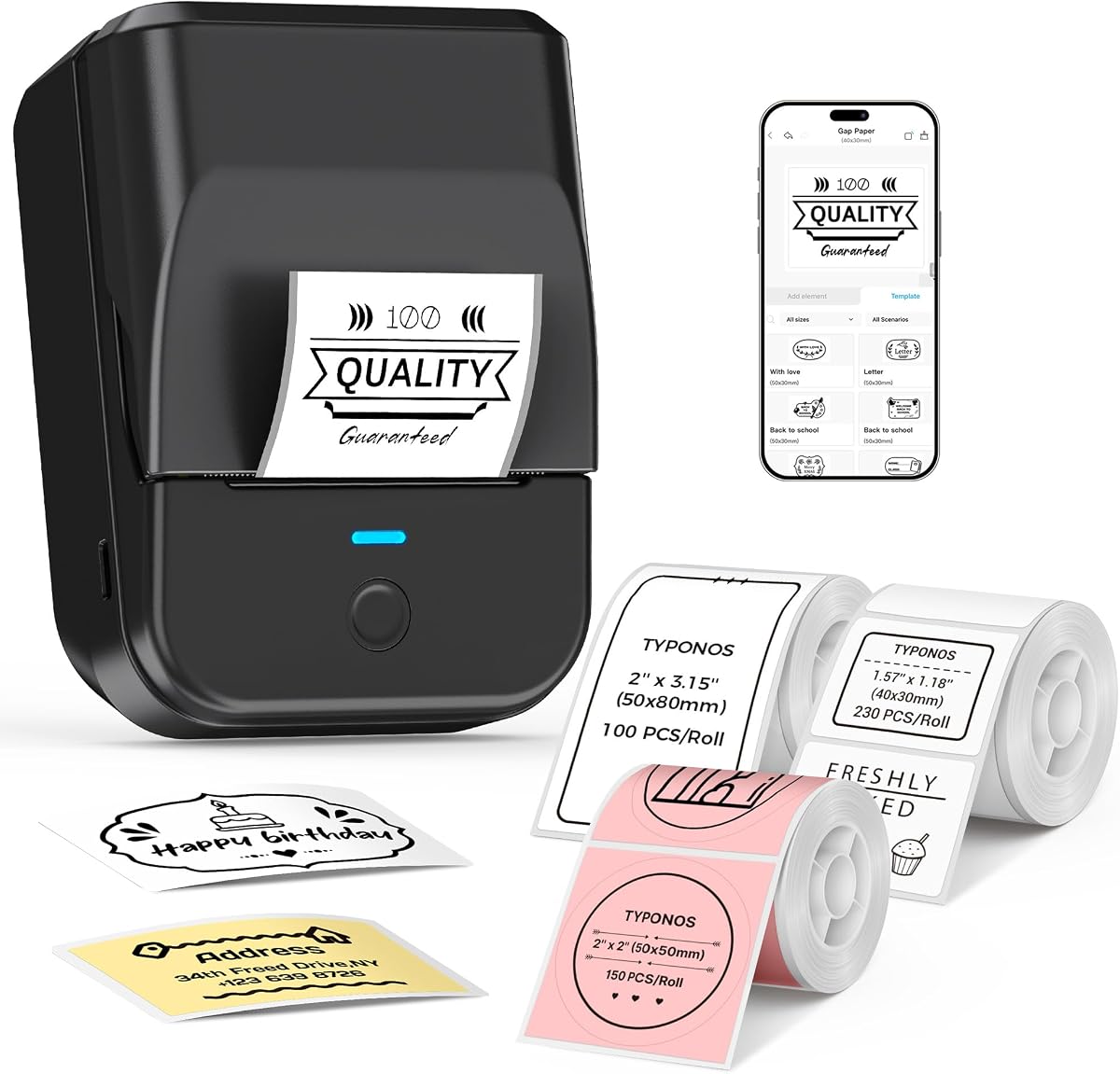
The NIIMBOT B1 is a compact, inkless printer ideal for precise library tasks like marking medicine bottles or tracking expiration dates. Its thermal technology ensures no mess and lower long-term costs.
We may earn a commission when you buy through this link, at no additional cost to you.
The app auto-detects label size and offers over 1500 symbols for customization. Rechargeable battery with auto-shutoff saves energy during extended idle periods, making it practical for shared workspaces.
Although it does not support tablets, it works well with phones and PCs. The ABS build is durable enough for daily use by staff handling various materials regularly.
Libraries seeking a small, reliable printer for specialized labeling needs should consider this option. It combines ease of use with robust features for organized, efficient workflows.
Thermal technology eliminates ink mess, offering clean and cost-effective printing solutions.
Auto-shutoff after 15 minutes of inactivity conserves battery life during extended use.
We may earn a commission when you buy through this link, at no additional cost to you.
The PM240 label maker features a powerful app with over 3800 templates and AI text-to-image capabilities. This allows libraries to create highly customized labels quickly for inventory or student supplies.
We may earn a commission when you buy through this link, at no additional cost to you.
With 203 DPI resolution, it produces crisp prints suitable for clear identification. The device supports Excel import and batch printing, which is valuable for processing large sets of data efficiently.
It offers up to 100 days standby time, ensuring readiness whenever needed. Its portable design and included tapes make it a convenient choice for teachers or small branch offices.
Libraries needing advanced app features and batch processing should choose this printer. It combines smart capabilities with practical portability for daily organizational tasks.
OCR text recognition and AI tools simplify label creation from digital data sources.
Standby time of up to 100 days ensures reliability during intermittent usage periods.
We may earn a commission when you buy through this link, at no additional cost to you.
The Seiko Smart Label Printer 620 is a reliable desktop solution for libraries needing consistent, rapid label production. It produces crisp addresses, file folders, and name badges efficiently.
We may earn a commission when you buy through this link, at no additional cost to you.
Its front load design makes changing labels quick and intuitive. The included software allows easy formatting and organization, ensuring labels meet professional standards without technical hassle.
While it lacks wireless connectivity, its stability and speed make it suitable for fixed workstation use. It is ideal for staff who prefer a traditional desktop workflow over app-based printing.
Libraries seeking a straightforward desktop printer should consider this model. It offers a balance of speed, ease of use, and reliability for ongoing labeling needs.
Front load design ensures fast and easy label roll replacement without tools.
Robust build and intuitive software provide consistent output for fixed workstation use.
We may earn a commission when you buy through this link, at no additional cost to you.
Selecting the right label printer requires understanding specific library needs such as volume, connectivity, and label types. This guide outlines key factors to ensure your choice supports efficient operations.
Libraries need printers that connect easily to existing networks or devices. Look for Wi-Fi or Ethernet if you require network sharing across multiple workstations. Bluetooth or USB is suitable for individual or mobile use.
Prioritize connectivity that matches your workflow to avoid delays and compatibility issues.
High-volume environments require printers capable of producing over 90 labels per minute to handle cataloging or shipping efficiently. Faster speeds reduce wait times and improve staff productivity during peak hours.
Choose a printer with sufficient speed to manage your daily labeling workload without bottlenecks.
Libraries need labels ranging from standard address to wide banner sizes. Ensure the printer supports the width and length required for shelves or bins. Durability features like oil resistance are essential for longevity.
Verify label specifications meet the physical demands of your storage and display systems.
Seamless integration with Windows, Mac, or mobile apps is crucial for staff efficiency. Look for printers with intuitive interfaces, template libraries, or tools like OCR to simplify data entry.
Choose software that reduces manual effort and supports the specific labeling tasks you perform.
Ongoing expenses for tapes or ink can exceed the initial printer cost. Thermal printers eliminate ink costs, while proprietary tapes may limit long-term savings. Compare price and availability of replacements.
Factor in total cost of ownership when selecting a model to avoid unexpected budget overruns.
Handheld or lightweight printers enable staff to label items directly on shelves without moving materials. A compact design fits better in crowded workspaces or mobile carts used for inventory.
Select a form factor that matches whether labeling happens at a desk or throughout the library.
Features like auto-cutters, barcode support, or color printing can significantly enhance functionality. Consider if you need dual-color options for visual hierarchy or memory storage for frequently used labels.
Evaluate extra features that directly contribute to efficiency and organization in your specific setting.
Reputable brands often provide better customer support, warranty coverage, and software updates. Established manufacturers like Brother offer proven durability and compatibility with various label types.
Prioritize brands with strong service networks to ensure minimal downtime during critical labeling periods.
Start by installing the recommended label rolls and connecting the printer via Bluetooth or USB. Use the companion app or desktop software to design your labels, ensuring text is clear and fits within the designated width.
For best results, clean the print head regularly with a lint-free cloth to remove dust or residue. Avoid exposing the device to extreme temperatures or humidity, as this can affect print quality and battery life.
Store label rolls in a cool, dry place to prevent warping or adhesive degradation. When not in use, turn off the printer or enable auto-shutoff to preserve battery charge for long-term reliability.
No, label printers require specific thermal or adhesive tapes designed for the printer model. Using standard paper can damage the print head or lead to poor adhesion. Always use manufacturer-recommended label rolls for optimal results.
For network connectivity, use the printer's Ethernet or Wi-Fi settings to join your library's secure network. Refer to the user manual for steps to configure IP settings and ensure driver compatibility with your operating system.
Standard thermal labels are not durable enough for outdoor exposure to sunlight or moisture. Consider specialized weather-resistant tapes if you need labels for outdoor signs or bins that may face harsh conditions.
Most professional label printers last between 3 to 5 years with regular use and proper maintenance. Lifespan depends on daily print volume, care of consumables, and adherence to manufacturer guidelines for cleaning.
Yes, most modern label printers support barcode generation directly from the app or software. This feature is essential for inventory management and scanning, ensuring quick and accurate item identification.
Drivers typically require updates when switching operating systems or adding new features. Check the manufacturer's website periodically for compatibility updates to avoid connectivity issues or printing errors.
The Brother P-Touch PT-D610BT stands out as the top overall choice for libraries needing professional connectivity and versatility. For those prioritizing speed, the QL-820NWB offers unmatched performance, while the Nelko P21 provides a budget-friendly option for small branches.
When deciding, consider your specific volume needs, available network infrastructure, and whether portability is essential for your workflow. Investing in the right features now will streamline operations and reduce long-term costs.
Remember that prices and availability fluctuate frequently, so always verify the latest details before purchasing. Use this guide to make an informed decision that enhances your library's organizational efficiency.