
Handheld Fish Finder Portable Fishing Kayak
4.2Editor score
Portable design with neck strap
Works in fresh and salt water
Detects fish and bottom structure
Finding the right tool to locate fish can make or break a day on the water. A good fishfinder provides clear readings of depth and structure so you know where to cast your line effectively. Modern affordable models now offer features that were once reserved for expensive boats.
We have evaluated ten distinct products based on their sonar clarity, ease of use, and overall value for money. Our comparison covers handheld units, kayak specific devices, and small boat mountable systems. Each entry offers a unique balance of performance and price for different fishing styles.
Every pick in this list highlights specific strengths such as battery life, screen visibility, or portability. You will find detailed breakdowns of what each model can do and where it might fall short. Please note that retail prices fluctuate so check current listings before purchasing.
4.2Editor score
4.6Editor score

4.5Editor score
As an Amazon Associate we earn from qualifying purchases.
The following table provides a side-by-side look at the key specifications and capabilities of all ten models. This overview helps you quickly identify which device matches your specific fishing needs and budget constraints without reading through every detail.


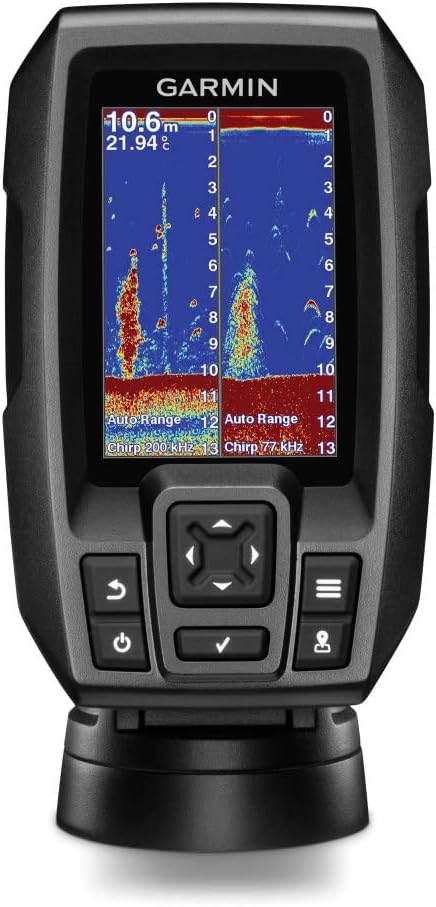
The Garmin 010-01550-00 Striker 4 stands out as a top contender for anglers seeking reliable performance at an accessible price point. With a strong rating of 4.6 stars, this model combines essential GPS features with advanced sonar technology in a compact package.
We may earn a commission when you buy through this link, at no additional cost to you.
Its Clear Vu scanning sonar offers near photographic images that reveal structure and fish with remarkable detail. The Chirp Sonar feature ensures wider frequency sweeps for crisper target separation. Additionally, the built-in flasher format caters to those who prefer traditional viewing styles during vertical jigging.
While the 3.5 inch screen is manageable, users seeking larger visuals might find it limiting compared to bigger models. The device relies on a 12 volt power source which requires proper wiring setup on a boat. These trade-offs are acceptable given the comprehensive feature set provided.
This unit is ideal for small boat owners or those transitioning from basic handheld units to GPS enabled systems. If you need a rugged device that handles navigation and fish finding with equal ease, the Striker 4 delivers consistent results.
The combination of CHIRP and ClearVü sonars allows anglers to see fish arches and bottom structure with unprecedented detail.
Built-in GPS lets you mark and navigate to specific locations like brush piles or docks with ease.
We may earn a commission when you buy through this link, at no additional cost to you.
This handheld unit represents the most affordable entry point for anglers who need basic depth and fish location data. With a 4.2 star rating, it offers a practical solution for kayak fishing or shore casting where a full boat mount is unnecessary.
We may earn a commission when you buy through this link, at no additional cost to you.
Powered by standard AAA batteries, it runs for four to five hours on a single set. The sonar detects water depth from three to three hundred and twenty eight feet and can differentiate between weeds, sand, and rocks. The included neck strap keeps your hands free while casting.
The main limitation is its speed constraint as it functions best on kayaks moving below five miles per hour. The display is monochrome and lacks the vividness of higher-end color screens. Despite this, the functionality is sufficient for casual fishing trips.
If you are on a tight budget or just need a backup finder for small crafts, this model delivers excellent value. It is easy to store in a tackle box and requires no permanent installation on your vessel.
The compact design and neck strap allow you to carry the unit effortlessly while managing your gear on a kayak.
This device works reliably in both fresh water and salt or sea water environments without corrosion issues.
We may earn a commission when you buy through this link, at no additional cost to you.
Lowrance is a trusted name in marine electronics and this Eagle model brings that reputation to the affordable segment. The 4.3 star rating reflects its solid performance as an entry-level device designed for easy installation and reading.
We may earn a commission when you buy through this link, at no additional cost to you.
The 4-inch IPS portrait screen ensures visibility even when wearing polarized sunglasses or under direct sun. Auto-Tuning Sonar reduces the need for manual adjustments so you can focus on fishing rather than dialing in settings. The included Bullet Skimmer provides broad coverage below your craft.
Some users might miss the built-in GPS found in higher-end models which limits waypoint creation capabilities. The interface relies heavily on fish icons which can sometimes lack precision compared to detailed sonar returns. These limitations are standard for this price tier.
This unit suits beginners or those who want a simple display without complex menus. It installs quickly thanks to the twist-lock connector making it a versatile choice for small boats or kayaks needing quick setup.
The IPS screen technology maintains clarity from wide viewing angles even in harsh lighting conditions.
Settings adjust automatically to water conditions so you do not have to manually tweak frequency or gain.
We may earn a commission when you buy through this link, at no additional cost to you.
The Vivid 4cv upgrades the classic Striker line with color displays that make interpreting sonar data much simpler. With a 4.7 star rating, it appeals to anglers who want more visual detail without jumping to a full chartplotter system.
We may earn a commission when you buy through this link, at no additional cost to you.
New vivid scanning sonar color palettes allow you to separate fish from background clutter at a glance. The included GT20 transducer supports both traditional CHIRP and ClearVü scanning. Built-in Quickdraw Contours mapping lets you see depth contours without needing a separate map card.
The color screen adds to the cost compared to monochrome units but improves readability significantly in varied lighting. The four-inch display remains compact which is good for small consoles but might feel small for large boats. The GPS performance is accurate for waypoint marking.
If you value visual clarity and mapping capabilities, this model is a significant upgrade from basic sonar units. It balances performance and price well for recreational anglers who need reliable data on the water.
Color displays help differentiate between fish and structure more easily than monochrome screens.
Built-in mapping shows depth contours so you can understand underwater terrain without extra charts.
We may earn a commission when you buy through this link, at no additional cost to you.
The PiranhaMAX 4 continues Humminbird's tradition of reliable entry-level sonars. With a rating of 4.6 stars, it offers a straightforward solution for anglers who prioritize sonar accuracy over complex navigation features.
We may earn a commission when you buy through this link, at no additional cost to you.
Dual Beam Sonar lets you switch between a narrow beam for detail and a wide beam for coverage. This flexibility helps identify fish holding structures effectively. The Tilt and Swivel Mount allows quick adjustments to view the screen at any angle on the boat.
The lack of GPS means you must mark locations manually on paper or another device. The display is functional but lacks the color enhancements found in newer models. However the unit is durable and backed by a one year limited warranty.
This is a solid pick for anglers who fish known waters and want a no-fuss display. If you need simple and accurate depth readings without extra features the PiranhaMAX 4 is a dependable choice.
Choose between narrow and wide beams depending on whether you need detail or broad coverage.
The included tilt and swivel mount makes it easy to adjust the display angle quickly.
We may earn a commission when you buy through this link, at no additional cost to you.
The LUCKY FFC1108 is designed specifically for kayakers and ice anglers who need a lightweight solution. It holds a 4.1 star rating which indicates decent performance but some variability in user experience compared to top-tier brands.
We may earn a commission when you buy through this link, at no additional cost to you.
The unit displays fish location and water depth along with bottom structures like weeds and rocks. It runs on standard batteries and offers a fish alarm to alert you when schools pass by. The backlight ensures you can see data even in low light conditions.
Some users report inconsistent readings which may be due to battery quality or transducer placement. The sensitivity adjustment helps but may require practice to master fully. These issues are common in budget handheld categories.
If you need a cheap and portable tool for quick casts without wiring a transducer this model works well. It is a great gift for anglers who explore remote spots where large units are impractical.
The one-hand design allows you to carry it easily on a kayak or while walking shorelines.
Five levels of sensitivity help you adapt to clear or turbid water conditions effectively.
We may earn a commission when you buy through this link, at no additional cost to you.
For those seeking professional-grade features without the highest cost, the Helix 5 offers exceptional value. With a 4.5 star rating, it combines powerful sonar with advanced mapping capabilities that are rare in the lower price brackets.
We may earn a commission when you buy through this link, at no additional cost to you.
The Dual Spectrum CHIRP sonar delivers clear views of fish arches and structure. It comes equipped with Humminbird Basemap covering over ten thousand lakes and coastlines. AutoChart Live lets you create custom depth and vegetation maps while boating.
The interface relies on a keypad which is reliable but takes time to learn compared to touch screens. The price is significantly higher than handheld models making it less accessible for budget shoppers. However the data quality is superior.
This unit is ideal for serious anglers who need reliable GPS navigation and precise sonar data. If you are willing to invest in quality this device will serve you well for many seasons.
Wide and narrow modes let you choose between maximum coverage or detailed scanning as needed.
AutoChart Live records depth contours so you can create custom maps of your favorite spots.
We may earn a commission when you buy through this link, at no additional cost to you.
This wireless model offers a modern take on portability by eliminating the need for wired transducers. The 4.3 star rating shows that users appreciate the convenience of castable or tethered sonar sensors that are easy to use.
We may earn a commission when you buy through this link, at no additional cost to you.
The sensor transmits data up to 262 feet away allowing you to cast it into specific spots. The display shows water depth, temperature, fish size, and bottom contour. Both the receiver and sensor are rechargeable which reduces the need for disposable batteries.
The range is restricted compared to wired units so you may not detect fish far from shore. Users must ensure the sensor floats correctly for the battery indicator to work accurately. These minor quirks do not outweigh the benefits.
If you want a clean setup without drilling holes in your kayak or boat this is an excellent option. It is also great for shore fishing where running a cable to a boat is impossible.
The sensor can be tethered to your line and cast up to 262 feet away from the display.
The color LCD screen has a backlight making it readable in both day and night conditions.
We may earn a commission when you buy through this link, at no additional cost to you.
This unit focuses on clarity and ease of use with a large HD screen that makes data easy to read. It shares a 4.3 star rating with other wireless models and adds extra features to attract fish during your casts.
We may earn a commission when you buy through this link, at no additional cost to you.
The sensor has an attractive lamp designed to draw fish closer to your line. It can detect depths up to 147 feet and displays water temperature and fish size. The display supports 21 languages making it accessible to a wide audience.
The depth limit may be a constraint for deep water fishing. The lamp feature is interesting but not essential for all types of fishing. The rechargeable system is a plus for long-term usability.
If you need a simple portable finder with extra bells and whistles this model fits the bill. It is suitable for lakes, rivers, and even sea fishing where depth is not extreme.
The HD screen ensures details are clear even when viewed from a distance or in bright light.
The sensor includes a light designed to attract fish to your cast location for better results.
We may earn a commission when you buy through this link, at no additional cost to you.
This wireless unit uses dual frequencies to help you fine tune your sonar readings without complexity. With a 4.2 star rating, it is a solid choice for anglers who want flexibility in how they detect fish.
We may earn a commission when you buy through this link, at no additional cost to you.
It detects fish size, water temperature, and bottom contour. The LED display allows you to switch between black and white backgrounds for better visibility in bright sun. Both receiver and sensor are rechargeable and work for about six hours.
The device struggles to display icons in very shallow water less than one meter which may limit use in some areas. It does not provide detailed imaging like larger scanners. For general depth and fish detection it performs well.
This model is great for those who want a simple wireless option with decent battery life. It is a practical tool for ice fishing or boat use where portability is key.
Two frequencies allow you to adjust the sensitivity and clarity of your sonar readings.
The LED screen lets you switch background colors to suit different lighting conditions.
We may earn a commission when you buy through this link, at no additional cost to you.
Choosing a cheap fishfinder involves balancing cost with the features you need most. Understanding the key factors will help you avoid buying a unit that underperforms for your specific fishing style.
The screen determines how easily you can read data. Monochrome screens are cheaper but color displays make it easier to see details. A size between 3.5 and 5 inches is typical for budget units.
Choose a size that fits your boat or kayak console. Ensure the display is bright enough to be seen in direct sunlight.
Sonar frequency and type impact how much detail you see. CHIRP sonar provides clearer images than standard units. Budget models often use 200 kHz which is standard for most freshwater needs.
If you fish in deep or turbid water, look for units with adjustable sensitivity. Chirp technology helps separate fish from structure more effectively.
Decide whether you need a handheld or fixed unit. Handheld models are ideal for kayaks or shore fishing. Fixed units offer stability and are easier to view from a seated position.
Consider the mounting hardware included. Twist lock connectors make installation simpler than screw mounts. Wireless units offer the most flexibility.
Battery life is critical for long days on the water. Some units use AAA batteries while others have rechargeable systems. Check how many hours of use you get per charge.
Rechargeable units are more cost effective over time. Ensure the battery type is easy to replace if it dies mid-trip.
Boating involves exposure to water and weather. Look for units with an IPX7 rating or similar protection. A durable casing will prevent damage from drops or splashes.
Durability reduces the need for replacements. Check user reviews for long-term reliability before purchasing.
Some budget units include GPS for marking waypoints. This feature helps you return to productive spots. Others may require you to add mapping cards separately.
If navigation is important, prioritize models with built-in GPS. Without it you may need to rely on external maps or apps.
Menus should be intuitive so you can access data quickly. Dedicated buttons are easier to use while fishing than touch screens. Auto-tuning features reduce the time needed to set up the unit.
Simplicity helps you focus on fishing instead of fiddling with settings. Look for units with clear instruction manuals.
Reputable brands like Garmin and Humminbird offer better support. A warranty protects your investment against defects. Check the duration and what is covered under the policy.
Good customer service ensures you can get help if issues arise. This adds value to the purchase even if the price is higher.
Start by ensuring your transducer is properly connected and submerged. If using a handheld model, place the transducer in the water and power on the display. Let the unit initialize for a few seconds before casting or moving.
Adjust settings like sensitivity and depth range to match water conditions. In clear water, lower sensitivity reduces clutter. In murky water, increase it to detect fish. Use zoom features to get closer looks at promising signals.
After use, rinse the unit with fresh water to remove salt or dirt. Store the device in a dry case when not in use. Regularly check battery contacts and replace rechargeable batteries to avoid sudden power loss on the water.
CHIRP sonar sends a continuous sweep of frequencies rather than a single frequency. This results in clearer images and better separation between fish and structure. Standard sonar is simpler and cheaper but provides less detail in complex environments.
GPS is not strictly necessary but helps mark and navigate to spots. If you fish unfamiliar waters, GPS adds significant value. Many budget models now include basic waypoint features so check before buying.
Yes, many units are designed for kayaks with portable or mountable options. Handheld models are ideal for small boats to save space. Ensure the unit is lightweight and the battery life lasts your trip duration.
Most affordable models detect up to 1600 feet in freshwater and 750 feet in saltwater. Handhelds often have lower ranges like 328 feet. Check the specifications for each model to ensure it fits your fishing depth.
Wireless units are convenient but have limited range compared to wired ones. They are great for casting or shore fishing where cables are impractical. For deep boats, wired units provide more consistent data.
Battery life varies by model and usage. Rechargeable units typically last 4 to 6 hours. Handhelds using AAA batteries may run for 4 to 5 hours. Always carry spare batteries for long days on the water.
The Garmin Striker 4 leads our list for its balance of features and performance. Handheld units like the Venterior offer the best value for budget conscious anglers. If you want advanced mapping, the Humminbird Helix 5 is a worthy premium option.
Prioritize the features that matter most to your fishing style. If you kayak a portable handheld may be better than a fixed unit. For boats with consoles, a GPS enabled display helps navigation significantly.
Remember that prices change frequently so verify current deals before purchasing. Investing in the right tool can improve your experience on the water without breaking the bank.