
SUNLU S4 3D Printer Filament Dryer
4.5Editor score
350W PTC heater
3 circulation fans
8 exit holes
This comprehensive guide compares the top filament dryer for 3D printing options available in October 2026 to help you choose the best model for your needs.
Finding the right filament dryer for 3D printing is essential for achieving consistent print quality and avoiding common issues like stringing and clogging. Moisture absorption can ruin even the best filaments, so having a reliable drying solution is crucial for any serious maker.
We have evaluated ten top-rated models based on capacity, heating technology, temperature control, and overall user experience. Our comparison covers a wide range of options from budget-friendly boxes to advanced dual-chamber systems designed for high-volume printing environments.
Each pick in this guide highlights specific strengths and ideal use cases to help you match a dryer to your workflow. Please note that product availability and pricing can change frequently, so always check the latest details before making your purchase decision.
4.5Editor score

4.6Editor score

4.3Editor score
The following table provides a side-by-side comparison of all ten filament dryers evaluated in this guide to help you quickly identify key specifications and features.



This Creality Space Pi X4 unit stands out for its dual heating chambers and ability to hold four standard 1kg spools simultaneously. It achieves a top temperature of 85°C which is essential for drying high-performance materials like ABS and Nylon effectively.
We may earn a commission when you buy through this link, at no additional cost to you.
The dual 200W PTC heating chambers remove moisture thirty percent faster than single chamber dryers which saves significant time in your workflow. Real time display allows precise control over temperature settings ranging from fifty to eighty five degrees for various filament types.
While it is larger and more expensive than basic models the investment pays off through consistent print results and reduced waste from failed prints. The silicone sealed enclosure ensures your filaments stay dry during pauses without needing extra bags.
This model is ideal for farms or professional setups running multiple printers that require consistent high quality filament. It offers the perfect balance of speed and capacity for serious makers who need reliable drying solutions daily.
Two independent heating zones allow for targeted drying which ensures even heat distribution across all spools at once.
The 85°C maximum temperature unlocks drying for PC ASA and PA filaments that need higher heat than standard PLA.
We may earn a commission when you buy through this link, at no additional cost to you.
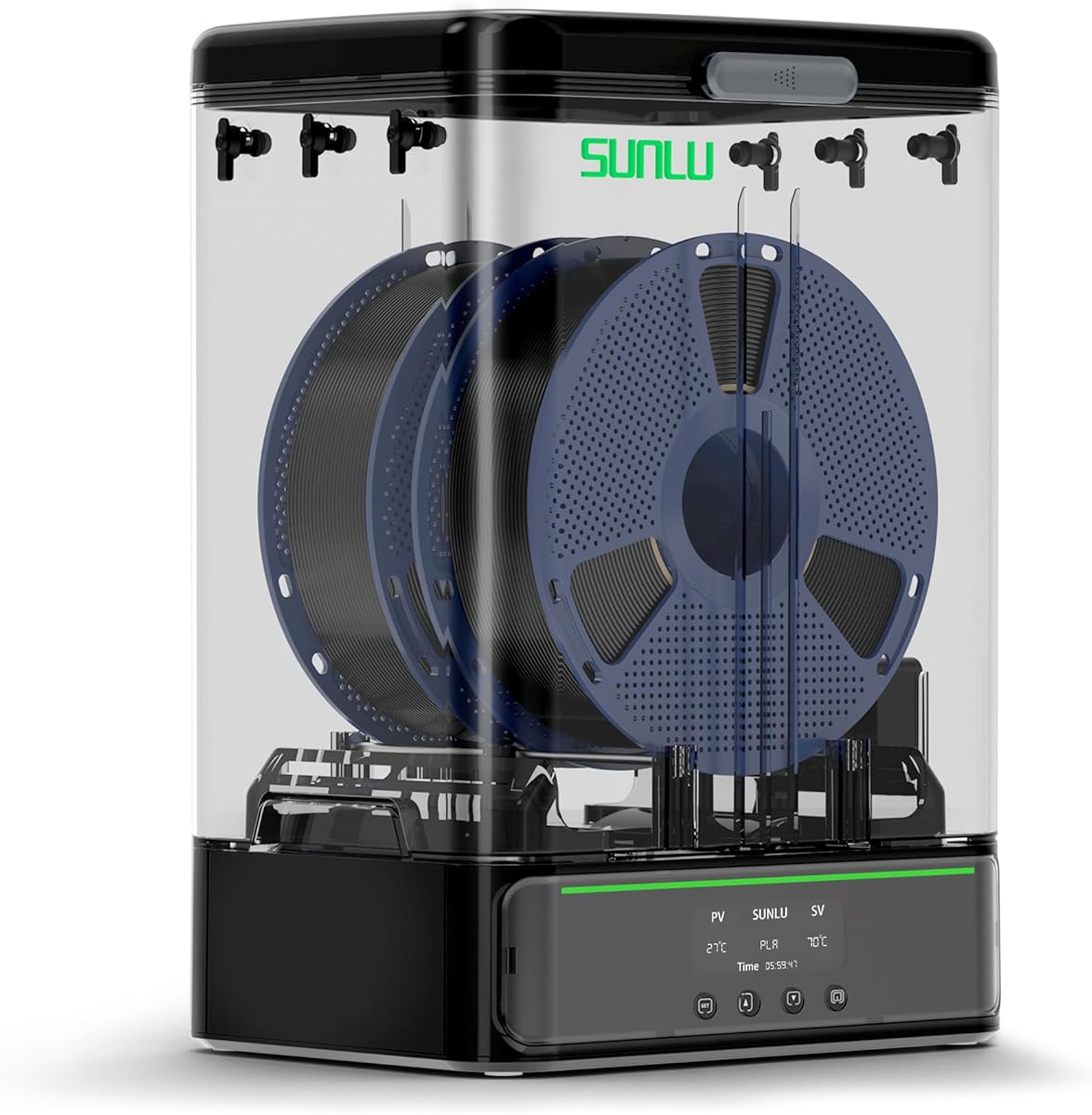
The SUNLU S4 is designed for heavy duty use with a massive internal volume that accommodates four kilogram spools comfortably. Its 350W PTC heater provides robust heating power that ensures quick and thorough moisture removal from even the largest spools.
We may earn a commission when you buy through this link, at no additional cost to you.
Three high-quality circulation fans work to maintain a consistent temperature throughout the entire chamber which prevents hot spots that could damage delicate filaments. The eight exit holes offer exceptional flexibility for connecting multiple printers or routing filament at different angles.
Due to its size this unit is best suited for dedicated workspaces where bench real is not a limiting factor. The net weight of four kilograms indicates a sturdy construction that remains stable during operation without vibrating or tipping easily.
Enthusiasts who run multiple printers or need to dry large batches of filament at once will find this model incredibly valuable. It combines raw power with thoughtful design features that prioritize even drying and ease of loading.
Three fans ensure that heat is distributed evenly so every spool dries at the same rate without manual rotation.
Eight distinct exit holes allow you to split the output to different printers which maximizes efficiency.
We may earn a commission when you buy through this link, at no additional cost to you.
The SUNLU S1 Plus offers a great entry point for anyone looking to improve print quality without spending a fortune. Its upgraded fan design helps speed up the discharge of excess water making it more efficient than passive heated boxes.
We may earn a commission when you buy through this link, at no additional cost to you.
A two inch LCD screen clearly displays temperature time and humidity so you can monitor conditions at a glance. The controls are straightforward allowing you to adjust settings easily to suit different filament types and environmental conditions.
While it may not reach the high temperatures needed for advanced engineering materials it handles common PLA PETG and ABS with ease. The compatibility with various filament brands makes it a versatile choice for home users and hobbyists.
If you are new to filament drying this model provides all the essential features you need to get started on a budget. It effectively solves stringing and adhesion issues while remaining compact enough for smaller workspaces.
The built-in fan actively removes humid air which accelerates the drying process significantly compared to static boxes.
The LCD screen provides real-time data so you never have to guess if your filament is dry enough.
We may earn a commission when you buy through this link, at no additional cost to you.
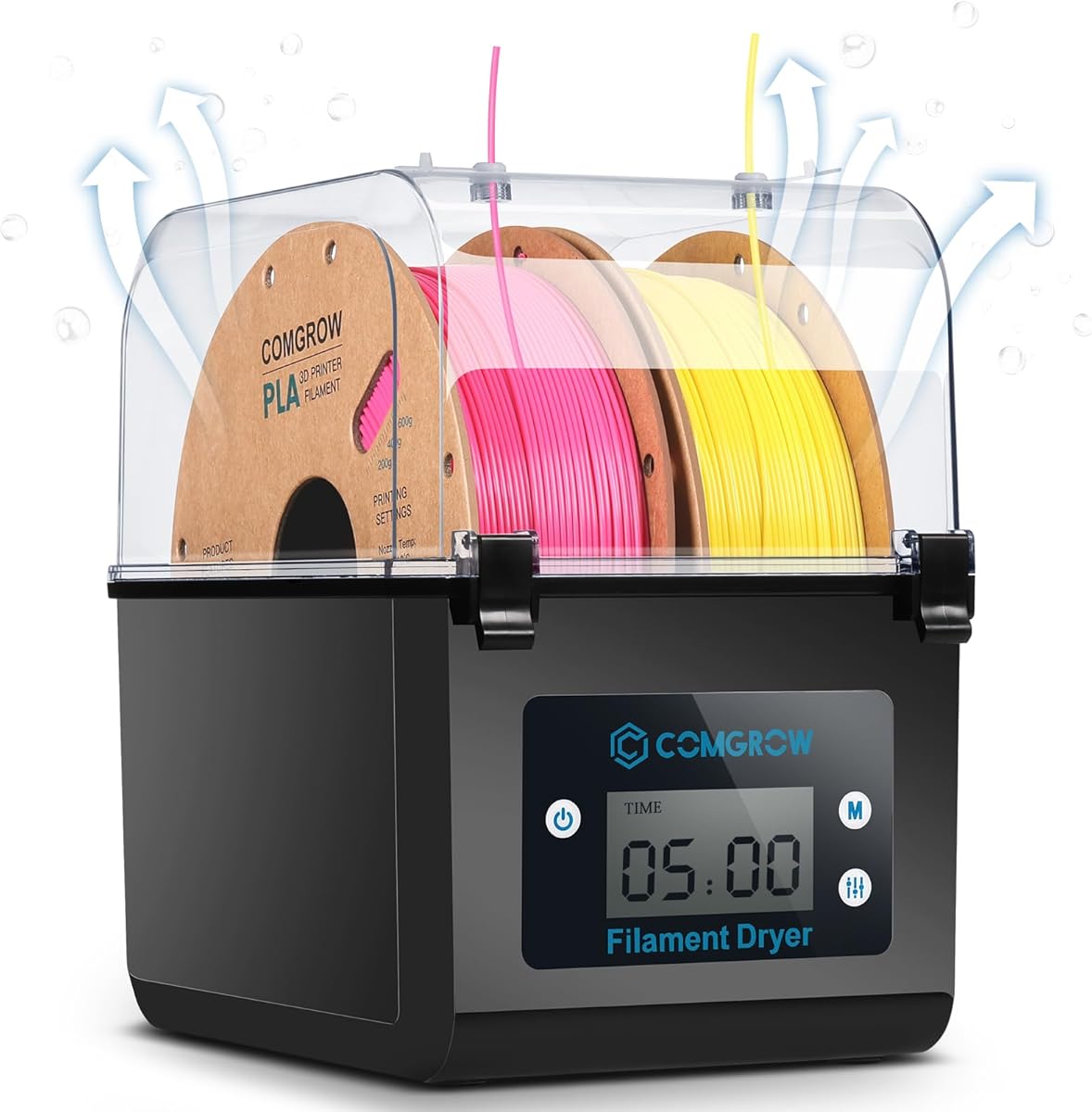
This Comgrow dryer box is a straightforward solution for keeping filament dry during prints with minimal fuss. It features a simple touch interface and a clear display that makes setting temperature and time incredibly easy for users.
We may earn a commission when you buy through this link, at no additional cost to you.
The internal volume allows storage of two standard kilogram spools which fits well in most home offices or bedrooms. A silicone cable sheath ensures smooth filament exit while a plug helps keep the interior sealed when not actively printing.
Although the maximum temperature is capped at fifty degrees it is sufficient for most common materials like PLA and ABS. The automatic shutdown feature after three minutes if not in work mode adds a layer of safety and energy efficiency.
For users who need a basic but reliable dryer to prevent moisture issues during printing this unit is an excellent choice. It balances affordability with practical features that deliver consistent results without complex setup.
The touch buttons and clear screen simplify operation so you can set and forget with confidence.
Snap buttons and silicone seals prevent moisture from entering the box to keep stored filament dry.
We may earn a commission when you buy through this link, at no additional cost to you.
This Creality Space Pi Plus model focuses on user convenience with one-key temperature settings for twelve different filament types. The upgraded PTC heater uses 360-degree hot air circulation to ensure uniform heating without uneven drying spots.
We may earn a commission when you buy through this link, at no additional cost to you.
A large three point seven inch touch screen makes it easy to track drying conditions and switch between temperature units. The built-in humidity monitor helps you judge filament status accurately so you can print with confidence.
The four-eight hour timer function allows for long drying sessions which is perfect for heavily saturated filaments that need extra time. While it holds only two spools the advanced controls make it a strong contender for precision work.
Users who want modern features like presets and touch control without paying premium prices will appreciate this unit. It bridges the gap between budget boxes and high-end professional systems effectively.
Twelve pre-set programs eliminate guesswork by automatically configuring optimal settings for specific material types.
360-degree hot air technology ensures every part of the spool gets equal heat for consistent results.
We may earn a commission when you buy through this link, at no additional cost to you.
The Polymaker Polydryer combines heating drying and storage into a single connected system to minimize moisture exposure. It allows you to move from drying directly to sealed storage without breaking the seal which helps maintain dry conditions.
We may earn a commission when you buy through this link, at no additional cost to you.
A built-in hygrometer provides clear visibility into internal humidity so you can manage filament status with confidence. The design promotes even airflow and controlled heating to prepare filament for use before and during printing sessions.
While it lacks extreme high temperatures for engineering plastics it covers most standard materials effectively including PLA PETG and TPU. The approach of using heat seal and desiccant protection ensures ongoing moisture defense between print jobs.
This system is ideal for users who prioritize workflow efficiency and want to keep their filament ready to print. It simplifies the maintenance routine and helps protect your investment in various filament types.
Moving from drying to storage without opening the box keeps humidity levels low and print quality high.
Works with a wide range of common filaments including PA Nylon making it suitable for diverse projects.
We may earn a commission when you buy through this link, at no additional cost to you.
This upgraded Space Pi SE model features a fast heating PTC solution that reaches sixty five degrees in just fifteen minutes. Thermal insulation cotton on the inner walls keeps the heat inside and prevents accidental burns during operation.
We may earn a commission when you buy through this link, at no additional cost to you.
It handles a wide variety of filaments including PLA PETG and ASA effectively to improve print quality and reduce failures. The knob interface combined with a simple display makes operation intuitive and straightforward for users.
While it only holds one kilogram spool at a time the quick heat up time compensates for the smaller capacity. The real-time humidity monitoring ensures you can track conditions accurately without needing extra equipment.
This is a solid choice for home users who need a compact efficient dryer for daily use. It offers a good balance of performance and simplicity for general 3D printing needs.
The upgraded heater warms the chamber quickly so you can start drying filament without long wait times.
Insulation on the inner walls protects your workspace and hands from excessive heat during operation.
We may earn a commission when you buy through this link, at no additional cost to you.
This SUNLU S4 unit is a robust dryer that delivers consistent results through its powerful heater and multiple fans. It is designed to handle four spools at once ensuring you have enough dry filament for extended printing runs.
We may earn a commission when you buy through this link, at no additional cost to you.
The three circulation fans create a uniform temperature environment which helps avoid issues like uneven drying or hot spots. The eight exit holes provide excellent flexibility for routing filament to multiple printers without tangling.
With a net weight of four kilograms this dryer is sturdy enough to remain stable during operation and easy to move if needed. It supports a wide range of materials from PLA to engineering grade options.
For makers running multiple machines this dryer simplifies the workflow by keeping all needed filament dry and accessible. It is a reliable tool that supports both hobbyist and professional printing environments.
Multiple fans ensure heat is spread evenly so all spools dry at the same rate effectively.
Holding four spools means less frequent reloading and more uninterrupted printing time.
We may earn a commission when you buy through this link, at no additional cost to you.
This SUNLU SP2 model is built to accommodate larger three kilogram spools which are often used in industrial settings. The 250W PTC heater heats up to seventy degrees in just fifteen minutes for quick and efficient drying.
We may earn a commission when you buy through this link, at no additional cost to you.
The design allows the dryer and storage box to be detached which means you can feed directly while drying or seal for later. An HD LCD touch screen shows temperature time and humidity clearly for easy monitoring.
Superior sealing performance with sliding latches ensures the filaments remain dry during storage phases. This is essential for maintaining quality when prints are paused or finished until the next use.
If you frequently use large spools or need a system that supports high volume printing this dryer is a strong option. It combines speed capacity and control in a single integrated unit.
Rollers and a bar holder allow you to load heavy spools safely without stressing the motor.
Separating the box from the dryer makes storage easier and allows for flexible workflow options.
We may earn a commission when you buy through this link, at no additional cost to you.
The SUNLU S2 is designed to revive damp filament through continuous spinning which ensures even drying across the spool. It works as a holder and dehydrator making it useful for keeping filament dry during actual printing sessions.
We may earn a commission when you buy through this link, at no additional cost to you.
A large touch screen allows easy setting of temperatures and times to suit specific needs without complicated menus. The translucent lid lets you check on the filament without opening the unit which helps maintain humidity levels.
With a large capacity and flexible compatibility with different filament diameters it fits most home setups well. It is particularly helpful for those living in humid locations who need to keep filament dry constantly.
This model is a practical choice for users looking to save money by reviving old spools instead of replacing them. It offers a reliable solution for maintaining print quality without requiring a huge investment.
The spindle ensures the spool rotates continuously so heat reaches every part of the filament evenly.
A translucent lid allows quick visual checks without interrupting the drying process or humidity.
We may earn a commission when you buy through this link, at no additional cost to you.
Selecting the right filament dryer requires understanding your specific needs regarding capacity material types and heating technology.
Consider how many spools you need to dry simultaneously. Larger units can hold multiple spools which is great for multi-printer setups but require more desk space. Smaller boxes are compact but may need frequent reloading.
Choose a size that matches your workflow and available space to ensure consistent drying without clutter.
Different filaments require different drying temperatures. Standard materials like PLA need lower heat while engineering materials like ABS or Nylon require higher temperatures to remove moisture effectively. Check the max temperature before buying.
Ensure the unit can reach at least the maximum temperature required by your most demanding filaments.
PTC heaters are generally safer and more efficient than traditional heating elements. Some models use 360-degree hot air circulation for even heating while others use a single zone which may lead to uneven results.
Look for units with fans or circulation systems to maintain uniform temperature distribution inside the chamber.
After drying filament can absorb moisture again quickly. Models that double as sealed storage boxes protect your investment between prints. Features like silicone gaskets and slide latches enhance this protection.
Prioritize dryers with effective sealing mechanisms to keep your filament dry after the cycle ends.
User interfaces vary from simple knobs to touch screens. Humidity monitoring is a valuable feature that tells you when drying is complete. Presets for different materials can save time and reduce errors.
Opt for units with clear displays and intuitive controls to simplify your drying process.
Ensure the dryer supports the specific diameters and materials you use. Most standard models fit 1.75mm and 2.85mm but check for larger sizes if needed. Some units also support specialty filaments.
Verify compatibility with your favorite brands and filament types to avoid fit issues.
Adjustable timers allow you to set precise drying durations. Some units offer long cycles for heavily saturated filament while others focus on quick turnaround. A countdown timer helps you track progress easily.
Look for a timer that matches your patience and filament saturation needs.
Sturdy construction ensures longevity and safety during operation. Look for thermal insulation to prevent burns and robust seals for durability. Warranty terms can also indicate manufacturer confidence in the product.
Invest in a well-built unit with good support to ensure reliable performance over time.
To use a filament dryer effectively start by placing your spool inside the chamber ensuring it is properly seated on the roller or holder. Close the lid securely to maintain an airtight seal for optimal moisture removal.
Set the temperature and time based on your filament type using the display or control knob. Allow the cycle to complete before removing the filament to ensure it is fully dry and ready for printing.
Regularly clean the interior and check seals for dust or debris to maintain performance. When not in use keep the unit unplugged and store in a dry area to prolong its lifespan.
You should dry filament regularly especially if it has been exposed to humidity or stored in non-sealed bags. Ideally dry spools before every major project or once a week if you print frequently. Monitor moisture indicators to know when drying is needed.
It is best to dry similar filament types together because they require specific temperature ranges. Mixing materials may lead to under or over drying which can affect print quality. If you must mix ensure all materials tolerate the same heat.
Drying PLA at temperatures above its glass transition can cause the filament to deform or become brittle. Stick to recommended temperatures typically between 45 and 55 degrees Celsius for PLA. Overheating can ruin the spool permanently.
A dryer can also function as storage if it has sealing features. Many models allow you to store dry filament inside after the cycle finishes. This saves space and ensures the material stays ready for use without extra bags.
Drying times vary from 4 to 24 hours depending on moisture levels and filament type. Heavily damp spools may need longer cycles to fully remove internal moisture. Check humidity readings to determine readiness accurately.
Most modern dryers have automatic shut off timers and safety features for unattended operation. Always check the manual for specific safety instructions and ensure the unit is on a stable non-flammable surface. Avoid leaving it unattended for excessive periods.
Most dryers accommodate standard 1.75mm and 2.85mm filament diameters but check the product specs to confirm. Some specialized units may have fixed spools that only fit one size. Ensure compatibility before purchasing to avoid fit issues.
Listen for popping sounds during printing which indicate moisture evaporation. A good dryer provides humidity readings to help you track progress visually. If prints are clean without stringing the filament is likely dry enough.
Choosing the right filament dryer can significantly improve your print quality and reduce waste from failed jobs. The top picks offer a range of features from basic budget-friendly boxes to advanced systems with dual chambers and touch screens.
Prioritize features like heating speed capacity and sealing based on your specific workflow and material needs. If you use engineering filaments look for higher temperature ranges while beginners may find a simple fan-assisted model sufficient.
Always check current availability and specifications before purchasing as models may be updated frequently. Investing in a reliable dryer protects your filament and ensures consistent results for every project.